Industry Innovation Through AI-Driven Simulation Models
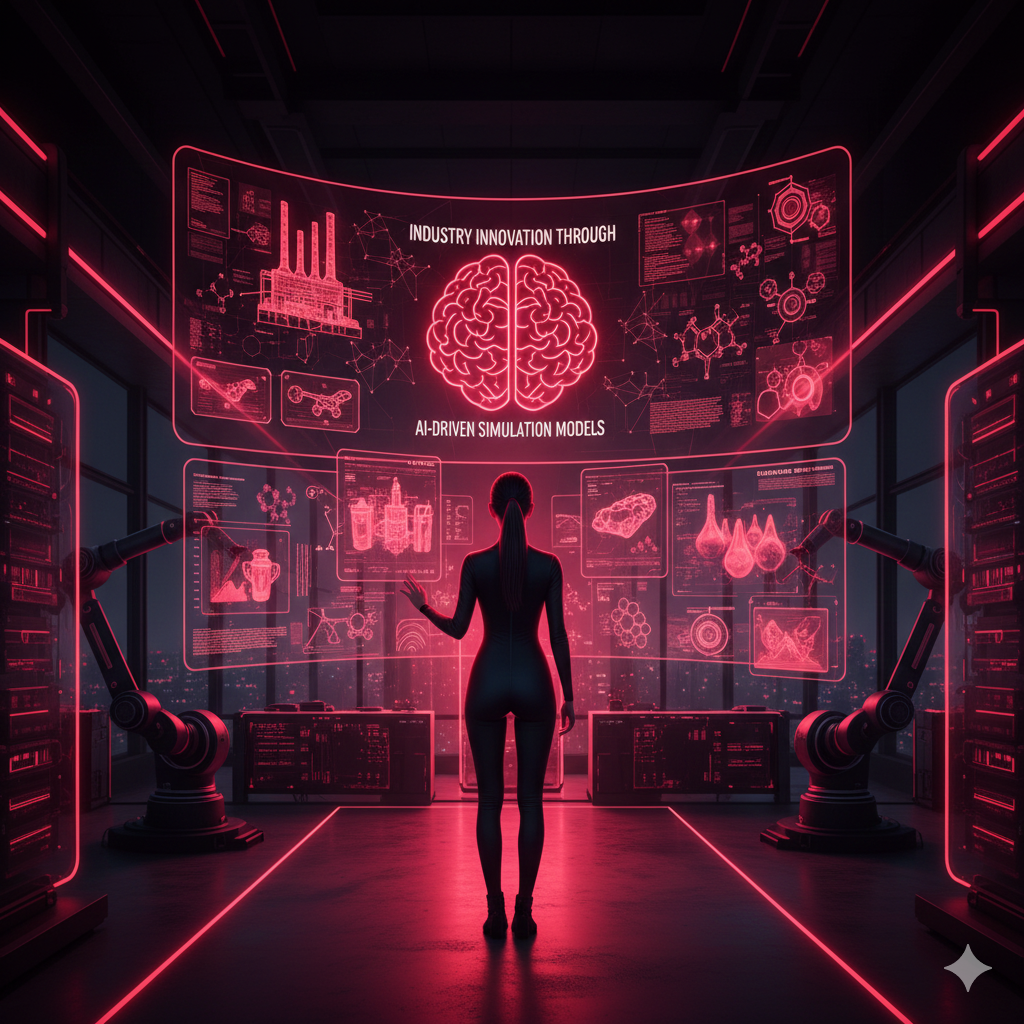
Industry Innovation Through AI-Driven Simulation Models
The demand that is being put on industries today to innovate quickly while simultaneously avoiding costs and risks is rising. When it comes to product creation, process optimization, and operational planning, the traditional trial-and-error methods are sometimes time-consuming, costly, and restricted in their area of application. Simulation models that are powered by artificial intelligence are causing a sea change in this environment by providing businesses with the ability to realistically test scenarios, improve systems, and anticipate results. In addition to reducing the need for actual prototypes or dangerous trials, these models speed up the innovation process, enhance decision-making, and improve risk management.
The Simulation of Complicated Manufacturing Procedures
Simulation models powered by artificial intelligence successfully mimic complex industrial processes digitally. For the purpose of producing precise virtual representations, they include data from many sources, including supply chains, operating settings, and machines. Because of this, engineers and managers are able to investigate how systems react under a variety of scenarios without disrupting the activities that are currently taking place. Simulations provide a risk-free setting for testing, which helps to reduce the likelihood of making mistakes that are expensive.
Product Development Cycles That Are Being Accelerated
Simulations driven by artificial intelligence make quick development and iterative testing possible. It is possible for designers to digitally examine the performance consequences of various versions of a product that they have modeled. Real-time simulations are performed to take into account a variety of factors, including material characteristics, environmental stressors, and operating loads. By doing so, the necessity for physical prototypes is reduced, and the duration of product development cycles is shortened. Faster, more flexible, and more data-driven innovation is becoming the norm.
Improvements Made to the Manufacturing Procedures
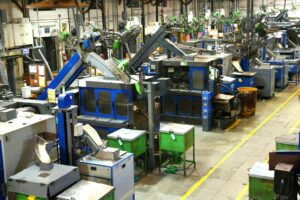
Manufacturing companies are able to assess production processes and find inefficiencies via the use of simulation models. It is possible for artificial intelligence to forecast how changes in machine setups, production sequences, or resource allocations would impact output and quality. With the ability to digitally test process changes before implementing them, organizations may reduce the amount of downtime and operational interruptions that occur. This results in manufacturing that is increasingly dependent on reliability, cost-effectiveness, and efficiency.
Assessment of Predictive Risk and Protection Against It
Simulations that are powered by artificial intelligence analyze complicated systems to discover possible breakdowns and dangers. Organizations are able to predict operational bottlenecks, equipment failures, or interruptions in supply chain operations by simulating severe circumstances or unexpected events. Early insights make it possible to implement proactive mitigation methods, which in turn make it less likely that expensive catastrophes will occur and improve overall resilience.
Providing Assistance with Strategic Decision-Making
When it comes to making decisions, simulation models provide decision-makers insights that are driven by facts on the probable outcomes of strategic choices. From the planning of investments to the distribution of resources, artificial intelligence can forecast the effects on performance, cost, and efficiency. By evaluating different situations, comparing options, and selecting optimum solutions with confidence, organizations are able to make informed decisions. Consequently, decisions become less dependent on assumptions and more informed as a result.
Increasing the Capacity for Training and Workforce Preparation
Additionally, AI simulations are beneficial to the training and improvement of employees’ skills. Workers have the opportunity to practice operating machines, reacting to crises, and managing complicated operations in a virtual environment throughout their training. When it comes to actual operations, this not only enhances readiness but also minimizes the danger of human mistake. Training that is simulated is not only safer but also more repeatable and scalable across big teams.
Learning on an ongoing basis and developing better models
Continuous learning allows AI-driven simulation models to grow over time and become more accurate. It is possible to improve the accuracy and prediction capacities of simulations by including feedback from activities that take place in the actual world. During the course of the evolution of industrial processes, this iterative approach guarantees that models will continue to be reliable and relevant. The capacities of innovation over the long term are improved by continuous improvement.
Cutting Down on Expenses and Waste of Resources
Simulators that are powered by artificial intelligence eliminate the need for real prototypes, an unnecessary amount of materials, and testing via trial and error by allowing virtual experimentation. While simultaneously increasing innovation, organizations are able to save money, resources, and their own time. Enhancements in productivity accumulate during the course of product development and operational planning cycles.
Impact on Innovation in the Industry Over the Long Term
Simulators powered by artificial intelligence are altering the way in which industries approach innovation. Through the use of virtual experimentation, predictive insights, and process optimization, businesses are able to produce new products, enhance efficiency, and reduce risks at a rate that is far quicker than their predecessors. Over the course of time, these models become indispensable to strategic planning, operational excellence, and sustainable development, therefore laying the groundwork for ongoing innovation that is driven by data.