AI-Driven Forecasting Models for High-Risk Industries

AI-Driven Forecasting Models for High-Risk Industries
Errors and delays may have significant repercussions in high-risk sectors including oil and gas, aviation, finance, and healthcare. These businesses operate under circumstances that are characterized by high levels of risk. Traditional techniques of forecasting often rely on historical patterns and human computations, both of which may not be able to appropriately foresee rapid changes or complicated interdependencies. Models of forecasting that are powered by artificial intelligence are revolutionizing risk management by delivering predicted insights that are more accurate, more quickly, and more flexible. The use of these models enables firms to predict issues, effectively manage resources, and reduce the likelihood of future losses before they take place.
Finding Predictive Accuracy Through the Analysis of Complicated Data Sets
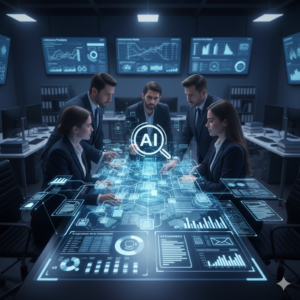
High-risk sectors produce vast amounts of data, which may include operational metrics, environmental variables, variations in the market, and the performance of equipment. An artificial intelligence model analyzes these complicated information in order to discover hidden connections and patterns that human analysts may miss. Artificial intelligence is able to produce a more complete and accurate prediction since it can concurrently learn from various inputs. Under conditions of uncertainty, this competence helps companies to make choices based on accurate information.
Continuous Real-Time Monitoring and Adjustments in Real Time
Forecasting systems that are powered by artificial intelligence continually monitor data streams, which enables projections to be adjusted in real time. Rapidly occurring changes in demand, environmental circumstances, or operational status are identified and accounted for instantly. In order to reduce the lag that is inherent in conventional models, forecasts are revised dynamically to reflect the fact that current events have occurred. It is possible for organizations to respond proactively rather than reactively, hence reducing the likelihood of disruptions occurring.
Identifying Potential Dangers and Providing Early Warning Systems
It is not enough to just anticipate results when it comes to forecasting in high-risk businesses; rather, it is necessary to detect possible dangers. Using artificial intelligence, models may identify abnormalities and trends that point to new dangers. As an instance, unexpected shifts in the readings of equipment may indicate that collapse is imminent, but rapid shifts in the market may have an impact on the stability of the financial system. Early notice makes it possible to intervene in a timely manner, so avoiding minor problems from developing into big predicaments.
Optimizing Resource Allocation in the Face of Uncertainty Artificial intelligence predictions provide insights that may be put into action for resource planning. This helps to ensure that staff, equipment, and supplies are distributed to the areas that need them the most. When working in high-risk sectors, it is essential to make effective use of available resources in order to ensure compliance, safety, and continuity of operations. Through the use of predictive models, conflicting priorities may be balanced, waste can be reduced, and preparation can be improved.
For the purpose of contingency planning, scenario simulation
Artificial intelligence-driven forecasting gives businesses the ability to model a variety of “what-if” scenarios. Within the context of these simulations, the effect of a variety of operational, environmental, or market changes is evaluated. A prospective consequence may be evaluated, mitigation methods can be tested, and contingency plans can be planned in advance by decision-makers. The use of scenario modeling helps to improve resilience and decreases the risk of disturbances that were not anticipated.
Cutting Down on Errors Caused by Humans in Critical Predictions
When it comes to analyzing complex information, manual forecasting is prone to shortcomings such as biases, oversights, and limits. By relying on data-driven computing and continual learning, artificial intelligence models avoid a significant number of these hazards. Predictions are more reliable and impartial, which enables them to assist decision-making with more confidence when dealing with higher stakes matters. Although human skill is still necessary for interpretation, artificial intelligence helps to limit the margin of error.
Maintaining Compliance with Regulatory Requirements and Safety Standards
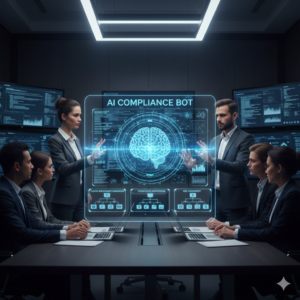
High-risk sectors are often subject to stringent regulations. In order to assist enterprises in maintaining compliance, forecasting models that are powered by artificial intelligence may predict risks that might result in infractions or safety breaches. Through the use of predictive insights, preventative actions may be applied in a proactive manner, therefore guaranteeing compliance with industry requirements. There is an increase in compliance and safety without a corresponding decrease in operational efficiency.
Influence on the Operational Resilience Over the Long Term
Forecasting that is powered by artificial intelligence is revolutionizing risk management in high-risk businesses. Organizations that make use of predictive models are able to obtain a strategic edge by lowering their susceptibility and predicting potentially challenging situations. Forecasts generated by artificial intelligence have the ability to increase operational resilience, speed up decision-making, and reduce the cost of probable failures over time. For the purpose of maintaining safety, efficiency, and competitive performance in contexts that are both complicated and high-stakes, these models are becoming more important tools.