How AI Optimizes Battery Storage for Residential Solar Systems
How AI Optimizes Battery Storage for Residential Solar Systems
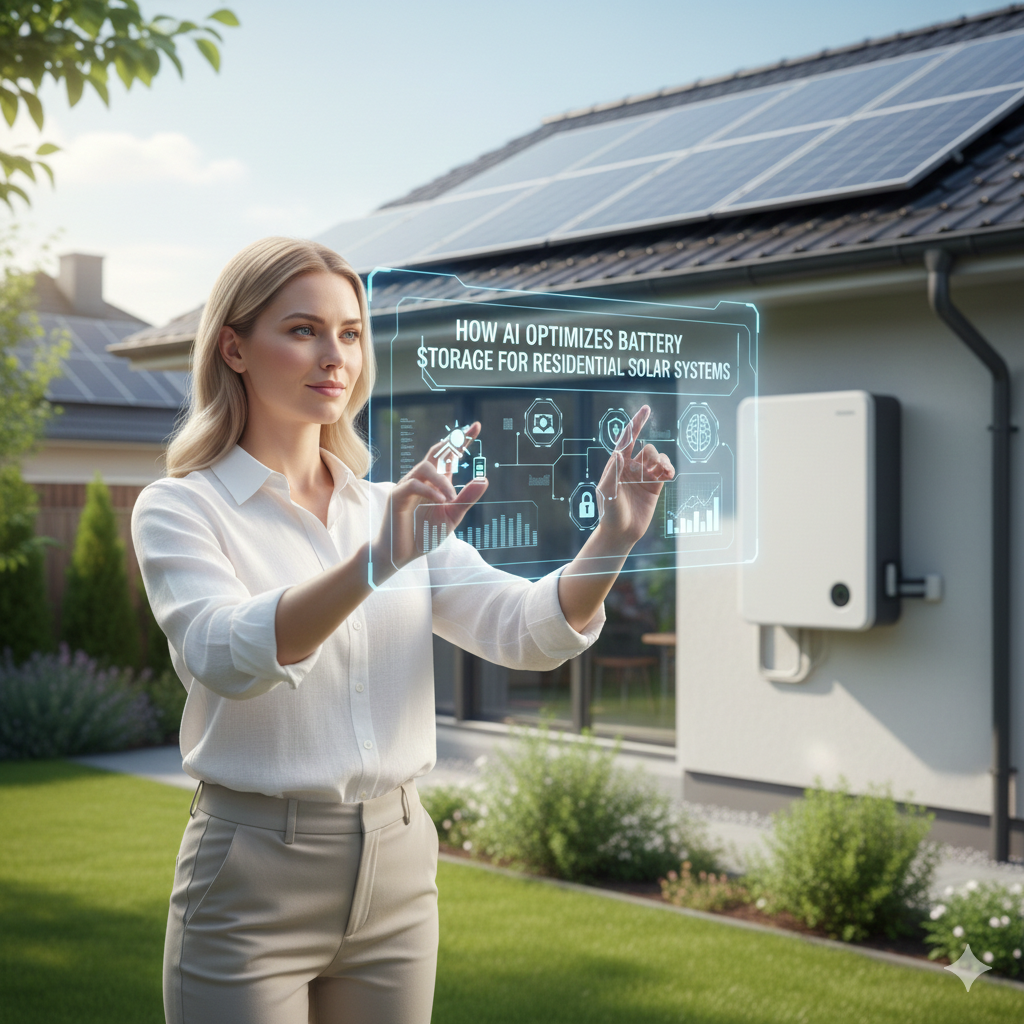
Solar energy systems for residential use are becoming more popular as homeowners grow more concerned with lowering their energy bills and relying on sustainable energy sources. However, there is still a huge obstacle to overcome in terms of successfully managing solar energy storage. Solar panels produce electricity on an intermittent basis, which is dependent on the amount of sunshine that is available. In order to guarantee that extra energy is accessible when demand exceeds production, it is necessary to store it in an effective manner. It has recently come to light that artificial intelligence is a potent technology that may be used to optimize battery storage in home solar systems. For the purpose of determining the most effective method of charging and discharging batteries, artificial intelligence algorithms may examine patterns of energy production and consumption, as well as weather predictions and past use data. This optimization guarantees that electricity is accessible when it is required, decreases dependency on the grid, and optimizes the financial advantages that solar systems may provide. Through the intelligent management of energy storage, artificial intelligence improves system efficiency, extends the lifetime of batteries, and contributes to more environmentally responsible energy habits in the house.
The Management of Energy Using Prediction
Artificial intelligence makes use of predictive analytics to forecast the energy requirements of households and the amount of solar energy produced. The artificial intelligence system is able to foresee times of high demand by studying previous consumption patterns, seasonal fluctuations, and weather forecasts. This allows the system to adapt battery use appropriately. This makes it possible for batteries to store extra solar energy during times of peak production and then discharge it during times of high demand or low solar output. The use of predictive energy management helps to guarantee that houses continue to have a steady source of energy while simultaneously reducing waste. The system is constantly learning from the patterns of energy use, which allows it to improve its projections over time and adjust to changes in the behavior of households or the circumstances of the environment.
Maximizing the Lifespan of the Battery
As a result of repeated charging and discharging cycles, battery deterioration is a typical worry in residential solar systems. This is because the total lifetime of the battery might be reduced. The functioning of the battery is optimized by artificial intelligence to reduce stress by balancing the depth-of-discharge and charging rates in accordance with the specifications of the manufacturer and the actual energy requirements. Artificial intelligence improves the life of batteries and minimizes the expenses associated with their replacement by preventing excessive cycles and maintaining appropriate operating conditions. Additionally, optimization algorithms are able to adapt to various battery chemistries, which guarantees that lithium-ion, lead-acid, or upcoming storage technologies are handled in an effective manner.
Maximizing Energy Efficiency in Real Time
In order to make dynamic modifications, artificial intelligence analyzes energy output, consumption, and storage in real time. The solar system is equipped with sensors that offer constant feedback on energy flow, the status of charge of the battery, and the demand from the home. This information is used by the artificial intelligence system in order to ascertain the most advantageous times for charging, discharging, or even selling extra energy back to the grid in the event that net metering is offered. In order to guarantee that the house utilizes solar energy in the most effective manner possible while yet preserving its operational stability, real-time optimization is used.
Integration with Intelligent, Home-Based Systems
Solar energy storage systems that are powered by artificial intelligence may be easily integrated with smart home technology. Through the process of integrating with appliances, thermostats, and other energy management equipment, artificial intelligence has the ability to plan energy-intensive tasks, such as charging electric vehicles or operating washing machines, during times when solar production is high or when electricity prices are low. Through this connection, efficiency is improved, energy costs are decreased, and households are given the opportunity to utilise renewable energy to its fullest potential. Artificial intelligence can learn family patterns and adjust schedules to strike a balance between convenience and energy efficiency.
Adjusting to the Conditions of the Grid
Additionally, artificial intelligence systems are able to react to signals from utility grids, taking part in demand-response programs or adjusting to fluctuating power price as necessary. It is possible for homes to generate further financial savings by either releasing stored energy during peak price times or feeding surplus power back to the grid. This ensures that the supply of electricity is never compromised while simultaneously maximizing economic advantages. Artificial intelligence strikes a balance between grid interactions and residential requirements.
Improving the Environment’s Health
A reduction in dependence on non-renewable power sources and an increase in the efficiency with which solar energy is used are both outcomes of efficient energy storage. AI-driven optimization helps to decrease the amount of energy that is wasted and the amount of additional grid power that is required, which in turn contributes to a reduction in carbon emissions. Artificial intelligence assists households in achieving their sustainability objectives while retaining their energy dependability via the intelligent management of storage.
Continuous Education and Adjustment to Change
In order to improve energy management techniques, artificial intelligence systems are constantly learning from both historical and real-time data. Artificial intelligence is able to adjust its algorithms in order to maintain optimum storage and efficiency in response to changes in family energy demand patterns, weather conditions, or the performance of solar panels. Continuous development guarantees that the solar system advances in tandem with changing circumstances, therefore optimizing both cost savings and energy sustainability over the course of time.
Reducing Expenses While Increasing Return on Investment
The financial return on residential solar investments is improved by artificial intelligence (AI) via the optimization of battery utilization, the extension of lifetime, and the integration with home energy systems. Saving money on power bills, maximizing the value of solar energy, and delaying the need to replace expensive batteries are all benefits of efficient storage. Homeowners are able to get the highest possible level of efficiency and savings from their solar systems by using a mix of predictive management, real-time optimization, and intelligent integration.
The Prospects of Artificial Intelligence in Residential Energy Storage
As artificial intelligence technology continues to progress, its role in the management of home solar batteries will extend to encompass capabilities such as problem detection, predictive maintenance, and integration with bigger smart grid project endeavors. Systems that are powered by artificial intelligence will achieve greater levels of autonomy and adaptability, and they will be able to optimize energy flows at both the home and community level. With the help of artificial intelligence, homes may achieve greater energy independence, cheaper expenses, and a stronger influence on the environment via the usage of renewable energy sources and intelligent battery management to accomplish these goals.