AI-Driven Smart Thermostats for Commercial Building Energy Savings
AI-Driven Smart Thermostats for Commercial Building Energy Savings
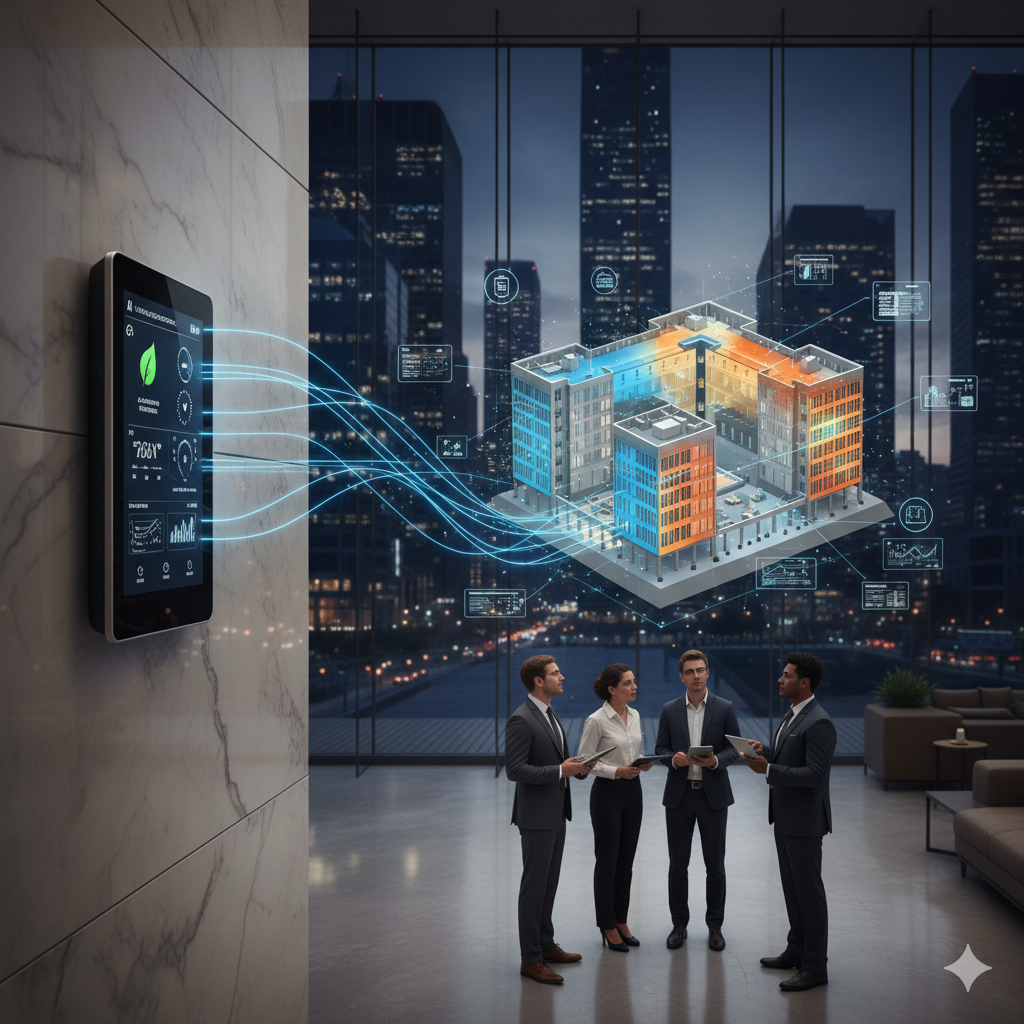
Heating, ventilation, and air conditioning (HVAC) systems are responsible for a significant amount of the overall energy expenses that are incurred by commercial buildings, which are among the major users of energy. Traditional thermostats perform their functions according to predetermined schedules or via human modifications, which often leads to wasteful energy use and excessive expenditures. Building energy management is revolutionized by smart thermostats powered by artificial intelligence. These thermostats analyze patterns of occupancy, weather conditions, and past energy use in order to improve heating and cooling system performance in real time. The temperature settings are automatically adjusted by these systems, which also maintain the comfort levels of the inhabitants and limit the amount of energy that is wasted. AI thermostats not only contribute to sustainability programs and decreased carbon emissions in commercial buildings, but they also save operating expenses. This is accomplished via the use of predictive analytics and adaptive algorithms developed by artificial intelligence. Because of their capacity to continually learn and adapt, they guarantee long-term efficiency and dependability, therefore revolutionizing the way in which commercial buildings handle energy operations.
The Modeling of Predictive Occupancy
Artificial intelligence-driven thermostats make use of predictive algorithms to anticipate trends of building occupancy. Artificial intelligence is able to decide which portions of a building need heating or cooling at certain times by evaluating data from motion sensors, access control systems, and historical use patterns. By avoiding the cooling of vacant places, this targeted strategy helps to reduce the amount of energy that is wasted while yet ensuring that comfort is maintained in the areas that need it. It is possible for the system to continually update its forecasts, allowing it to accommodate changes in workplace schedules, seasonal fluctuations in occupancy, or abnormal occurrences.
Adjustments Made in Real Time to the Environment
Temperature, humidity, and sun gain are just some of the environmental factors that are monitored in real time by smart thermostats, which monitor both interior and outdoor environments. This data is used by AI to make dynamic adjustments to the settings of the HVAC system, which ensures perfect temperature management while cutting down on energy use. For example, the system may pre-cool or pre-heat areas depending on predicted occupancy or changes in the weather, so minimizing the amount of energy that is required during peak hours. By making this constant adjustment, over-conditioning may be avoided, equipment strain can be reduced, and the overall efficiency of building energy systems can be improved.
The incorporation of Building Management Systems: Integration
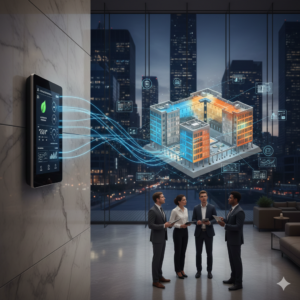
This allows for centralized control over various heating, ventilation, and air conditioning (HVAC) units, lighting, and other energy-consuming devices. Artificial intelligence thermostats can connect smoothly with current building management systems (BMS). A comprehensive approach to energy efficiency is made possible by integration, which involves the coordination of lighting schedules, window shading, and occupancy patterns with heating, cooling, and ventilation systems. By regulating energy on a system-wide basis, artificial intelligence improves operational efficiency, lowers expenses, and increases comfort for all of the people who are resident in the building.
Applying Knowledge Obtained from Past Data
In order to improve their algorithms over time, artificial intelligence smart thermostats make use of past data on energy use and ambient conditions. Patterns such as peak energy use hours, seasonal temperature fluctuations, and behavioral tendencies of building inhabitants are among the characteristics that they understand. Because of this ongoing learning, the system is able to make more accurate predictions about the amount of energy that will be required, properly plan HVAC operations, and locate places where more energy savings may be made. With the passage of time, the thermostat will become more intelligent, which will result in an increase in both comfort and cost-efficiency.
The reduction of costs and the saving of energy
AI-driven thermostats have the potential to drastically decrease the amount of energy that commercial buildings use as well as their utility costs. This is accomplished by optimizing heating, cooling, and ventilation. Using automated adjustments helps to eliminate waste, and using predictive scheduling helps to guarantee that energy is only utilized when it is required. The decrease in energy consumption not only brings about a reduction in operating expenses, but it also brings about a reduction in the environmental imprint of the structure. These savings may be enormous for big buildings that have numerous zones or tenants, helping to both financial and sustainability objectives in the process.
Climate Control That Is Adaptable
Artificial intelligence systems provide adaptive temperature management, which strikes a balance between energy economy and occupant comfort. While they are able to emphasize comfort in regions with heavy traffic, they are able to save energy in areas with less traffic. The use of adaptive control takes into consideration environmental elements such as swings in the temperature outside, sun radiation, and humidity. This helps to ensure that interior surroundings continue to be pleasant without using an excessive amount of energy. This sophisticated balance maximizes the enjoyment of the occupants while simultaneously preserving the efficiency of the activities.
Management of Predictive Maintenance and Optimization of Performance
Artificial intelligence thermostats have the ability to identify abnormalities in the operation of heating, ventilation, and air conditioning systems, such as odd energy spikes, equipment inefficiencies, or probable system breakdowns. The system is able to inform maintenance staff to execute targeted interventions, hence avoiding expensive downtime or repairs to occur. This is accomplished by recognizing faults at an early stage. Maintaining HVAC systems with predictive maintenance ensures that they perform at maximum efficiency, which in turn extends the lifetime of the equipment and maintains energy savings over time.
Helping to Achieve Sustainability Objectives
It is possible for thermostats that are powered by artificial intelligence to contribute to sustainability projects by cutting carbon emissions and total energy usage. Climate management that is energy efficient is in line with the goals of corporate social responsibility, environmental certifications, and legal requirements. Organizations are able to lessen their effect on the environment while also preserving a pleasant and productive working environment if they manage the energy in their buildings in an efficient manner.
AI’s Prospects in the Field of Commercial Energy Management
The use of artificial intelligence in the management of energy in commercial buildings is increasing beyond thermostats to include intelligent building solutions in their entirety. For the purpose of optimizing all elements of building operations, artificial intelligence will merge with improved sensors, renewable energy sources, and automated processes. The implementation of predictive energy management, adaptive temperature control, and real-time monitoring will become the norm, which will make it possible for buildings to function in an efficient, environmentally responsible, and self-sufficient manner. The first step toward completely intelligent and energy-conscious business settings is represented by smart thermostats that are powered by artificial intelligence.