The Use of Artificial Intelligence in Disaster Management and Early Warning Systems
The Use of Artificial Intelligence in Disaster Management and Early Warning Systems
Earthquakes, floods, wildfires, pandemics, and industrial accidents are all examples of both natural and man-made catastrophes, and these events have the potential to cause severe damage to human lives, infrastructure, and economies. In the past, disaster management has depended on human monitoring, analysis of historical data, and reactive actions as its primary methods of operation. Nevertheless, the emergence of Artificial Intelligence (AI) is revolutionizing the way in which disaster response and preparation are carried out, resulting in systems that are more proactive, more intelligent, and quicker.
Technologies that are driven by artificial intelligence are already playing a significant role in anticipating catastrophes, delivering early warnings, coordinating responses to emergencies, and minimizing the amount of damage that occurs. This change is making communities more resilient and saving the lives of countless people.
The Part That Artificial Intelligence Plays in Managing Disasters
Artificial intelligence (AI) is beneficial to disaster management at every level of the process:
- Anticipation and Evaluation of Risk
- In order to determine the likelihood of a catastrophe occurring, machine learning algorithms use satellite images, climatic data, seismic activity, and social media signals.
- Predictive analytics is a tool that may be used to make predictions about the probability and severity of disasters such as hurricanes, wildfires, and floods.
Systems That Provide Early Warnings
- Artificial intelligence improves the effectiveness of monitoring networks via the processing of huge quantities of real-time data that come from sensors, satellites, and Internet of Things (IoT) devices.
- Through the use of SMS, mobile applications, and radio, Natural Language Processing (NLP) systems provide communities with notifications in their native languages in a timely manner.
Response in the Event of an Emergency
- Drones and robots that are powered by artificial intelligence (AI) are used to aid in search and rescue activities.
- In order to provide direction for rescue activities, computer vision evaluates damage from satellite photos.
- Emergency information is provided to individuals via the use of chatbots and virtual assistants.
Recovery After a Disaster
Artificial intelligence models are used to evaluate infrastructure damage in order to expedite the rehabilitation process and the processing of claims for insurance.
Data analytics is useful for determining how resources should be allocated for the purpose of rebuilding.
1. Flood Forecasting and Mitigation are the first of the Key Applications of Artificial Intelligence in Disaster Management.
Flood warnings are issued on the basis of predictions made by models that are driven by artificial intelligence. These predictions include river water levels, rainfall patterns, and concerns with urban drainage. For instance, Google’s attempt to anticipate floods using artificial intelligence (AI) delivers warnings in real time in areas that are at risk.
2. Monitoring and Forecasting of Earthquakes
Earthquakes continue to be difficult to forecast, but artificial intelligence (AI) is being used to study seismic wave patterns in order to identify early warning signs and enhance risk modeling. In addition, artificial intelligence may be used to assist in the identification of infrastructure that is susceptible to damage.
3. Detection of Wildfires
Smoke and fire hotspots are identified in their early stages using computer vision systems, which evaluate satellite and drone data. In addition, models that are driven by artificial intelligence are used to forecast the development of wildfires based on the wind, vegetation, and meteorological conditions that are present.
4. Monitoring for Outbreaks of Disease
By examining mobility data, social media, and health records, artificial intelligence (AI) is able to forecast epidemics of illnesses including malaria, dengue, and COVID-19. Authorities in the health sector are able to take preventative measures with the assistance of early warning systems.
5. Warnings of Cyclones and Tsunamis
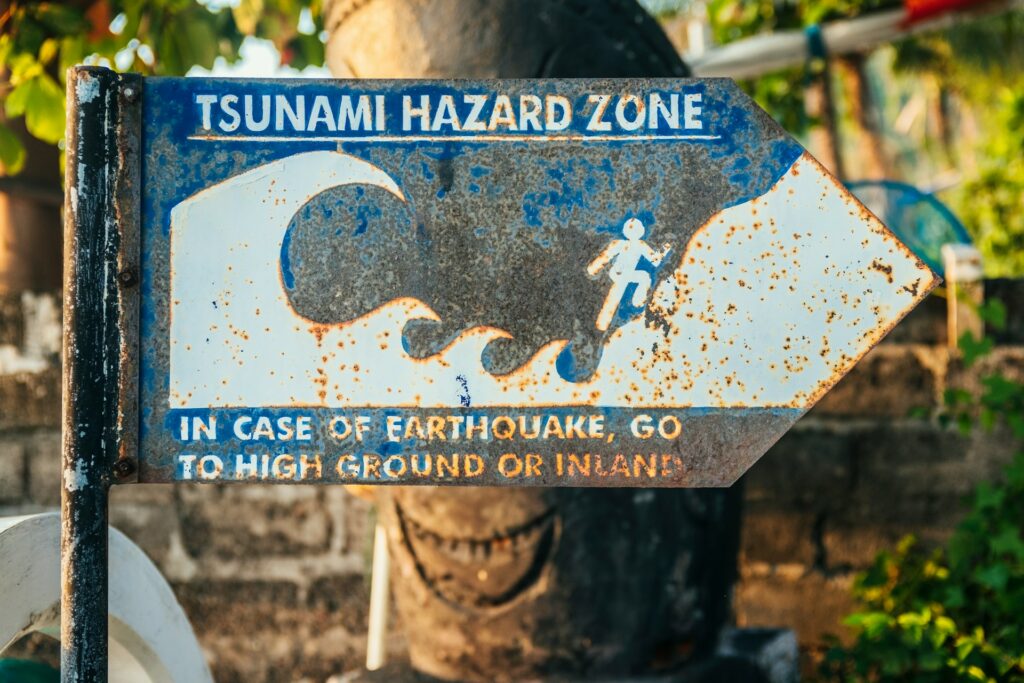
In order to identify the possibility of a tsunami or storm and give notifications to coastal areas in advance, machine learning algorithms analyze data from the oceans and atmosphere.
6. Resource allocation in the midst of a crisis
By assessing population density, damage levels, and logistics, artificial intelligence is able to optimize the distribution of food, water, medical assistance, and shelter.
Advantages of Artificial Intelligence (AI) in Disaster Management
Early Detection and Warnings: Gives communities more time to evacuate or prepare for an emergency situation.
- Data-Driven Decisions: Decreases dependence on guessing when it comes to catastrophe preparation.
- Faster Response: Enhances the coordination of emergency services.
- Cost Efficiency: Through the use of timely interventions, it reduces economic losses to a minimum.
- Scalability: It is possible to apply this across different locations and kinds of disasters.
- Impact on Saving Lives: In the end, it brings about a reduction in the number of people who are killed or injured.
Examples from the Real World
Google Flood Hub: Delivers flood predictions that are driven by artificial intelligence in nations such as Bangladesh and India.
- One Concern (USA): Employs artificial intelligence (AI) to simulate different scenarios of disasters and to assist cities in their preparation for such events.
- Projects undertaken by NASA and ESA: Make use of artificial intelligence to analyze satellite images in order to monitor wildfires, storms, and deforestation.
- UN Global Pulse: Utilizes artificial intelligence and big data to monitor humanitarian emergencies and provide assistance in the aftermath of disasters.
- Earthquake Systems in Japan: Artificial intelligence and sensors are used to identify earthquakes and offer early warnings to the public.
- Difficulties That Arise When Artificial Intelligence Is Utilized in Disaster Management
- Data gaps, which result from data that is either incomplete or of poor quality, lead to inaccuracies.
High Costs: It may be costly for underdeveloped nations to establish AI infrastructure.
Reliance on Connectivity: There are several regions that are prone to disasters that do not have access to dependable communication systems or internet connections.
- Prejudice and Mistakes: Panic or ignored warnings might result from forecasts that are inaccurate.
- Ethical concerns: It is of the utmost importance to handle sensitive personal information in a responsible manner.
- The Role of Artificial Intelligence in Disaster Management in the Future
- Looking forward, artificial intelligence (AI) will continue to increase catastrophe preparation and resilience. The following are some of the most important trends that will emerge in the future:
- Real-time data collecting from millions of sensors via integration with the Internet of Things (IoT) and 5G
- Simulations of metropolitan regions that are used to evaluate catastrophe scenarios are known as “digital twins of cities.”
- Collaborative artificial intelligence (AI) systems provide shared data platforms with the purpose of predicting disasters on a worldwide scale.
- Autonomous Drones and Robots: Search, Rescue, and Delivery Missions That Are More Advanced
- Customized Notifications: Alerts that are tailored to the specific locations and risk levels of each person.
Artificial intelligence will become an essential ally in the protection of communities from both natural and human-caused catastrophes as technology continues to improve.
Artificial intelligence has become a revolutionary technology in the fields of catastrophe management and early warning systems. Artificial intelligence (AI) assists in reducing human and economic losses by anticipating potential dangers, sending out notifications in a timely manner, and improving emergency actions. The crisis management systems of the future will be more collaborative, more efficient, and more intelligent than they are now, even if there are still issues to be addressed with data, cost, and ethics.
Artificial intelligence (AI) provides a means of achieving resilience, safety, and optimism in a world where the threat of catastrophes is increased due to climate change and the rise of the population.