How Computer Vision Powers Modern Apps, Cameras, and Smart Devices

How Computer Vision Powers Modern Apps, Cameras, and Smart Devices
In recent years, computer vision has emerged as one of the most revolutionary technologies, providing computers with the ability to comprehend and interpret visual input in a manner that closely resembles the perception of humans. The ability of technology to “see” and react to the environment in an intelligent manner is made possible by computer vision. This capability is used in a wide range of applications, from the cameras of smartphones and augmented reality apps to smart home devices and industrial automation. It is a fundamental component of current digital experiences since it is used in a wide range of fields, including but not limited to entertainment, healthcare, security, shopping, and transportation.
Learning about the topic of computer vision
The fundamental concept of computer vision is the scientific process of training robots to assess, comprehend, and react to information that is presented in visual form. It utilizes algorithms that analyze photos and videos in order to detect objects, identify patterns, and make choices based on the information that the computer is able to see. Computer vision allows devices to recognize objects, determine distances, detect movement, and comprehend situations in real time by transforming pixels into structured data.
Responsibilities of Artificial Intelligence
The field of computer vision is heavily dependent on machine learning. Rather of manually writing rules for every possible circumstance, engineers train models using vast datasets of annotated photos and videos. Convolutional neural networks (CNNs) are an architecture that is often employed in computer vision because they are excellent at identifying features, edges, and patterns inside pictures. These models are able to learn how to identify objects, categorize photographs, and generate predictions with a high degree of accuracy as a result of the recurrent training that they undergo.
Use Cases in Both Cameras and Smartphones
The usage of computer vision is essential to the functionality of contemporary smartphones in order to improve the quality of photographs and user experience. Visual analysis is necessary in order to take use of features such include scene detection, portrait mode, face recognition, and augmented reality filters, among others. Algorithms for computer vision are able to automatically detect faces, calculate the distance between objects and the camera, adjust exposure, and even eliminate unwanted objects. Users are able to take photographs that seem to be of a professional quality without the need for specialist equipment or manual changes thanks to this.
Applications that incorporate augmented reality and are interactive in nature
The ability to map and comprehend the actual surroundings is made possible via the use of computer vision technology, which is what enables augmented reality (AR) apps. Augmented reality applications are capable of layering virtual things over actual environments, monitoring motion, and enabling users to engage with digital material in a way that seems organic. This technology is often used in the fields of gaming, interior design, education, and marketing, in which the precise identification of objects, motions, and surfaces is of the utmost importance for the purpose of creating immersive experiences.
Intelligent Home with the Internet of Things (IoT) Gadgets
Computer vision is used by smart home devices to provide security, automation, and convenience. Homeowners are able to get warnings in real time via cameras equipped with artificial intelligence, which can identify the presence of humans, dogs, and any other unexpected behavior. Smart appliances have the capability to keep track of use patterns, identify things, or even provide support to users who are visually impaired. These gadgets are capable of responding intelligently to their surroundings, which increases both safety and efficiency, by using a combination of sensors, cameras, and algorithms based on artificial intelligence.
Applications in the Industrial and Retail Sectors
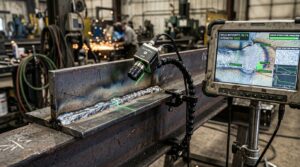
Computer vision allows for quality control, flaw identification, and automated inspection on manufacturing lines in industrial environments. Retailers use it in cashier-free checkout systems, for the purpose of managing their inventory, and for analyzing consumer behavior. Through the process of analyzing visual data on a large scale, computer vision is able to minimize the number of mistakes made by humans, accelerate processes, and improve decision-making across a wide range of industries.
Self-Driving Cars and Their Impact on the Transportation Industry
Drones and autonomous vehicles make use of computer vision in order to move about securely. The information that is gathered by the cameras and sensors in relation to roadways, obstructions, people, and traffic signs is visual in nature. The AI models process this data in real time to make judgments while driving, maintain the position in the lane, and prevent crashes. A vital element of autonomous navigation is the technology of computer vision, which enables cars to properly interpret the world around them.
Even though it has the ability to do so, computer vision encounters difficulties such as the variation in lighting conditions, objects that are obstructed, and situations that are complicated or crowded. In order to avoid introducing biases from training data, models must be able to generalize successfully to new settings. Additionally, the necessity for huge annotated datasets and the high computing needs pose challenges for smaller companies or edge devices.
Prospects for the Field of Computer Vision in the Years Ahead
The continued development of computer vision technology will likely result in the broad deployment of more intelligent cameras, more interactive applications, and the general acceptance of computer vision technology in the fields of healthcare, security, and industrial automation. Multimodal artificial intelligence, which combines vision with audio, text, and sensor data in order to develop a more complete awareness of the surroundings, is one of the trends that is currently on the rise. Due to the ongoing development of edge computing and improvements in efficiency, it will be possible for devices to interpret visual input on a local level, which will decrease latency and improve their ability to respond in real time.
The intelligence that is seen in a variety of contemporary applications, cameras, and smart gadgets is largely due to the technology of computer vision. It changes the way that we engage with technology on a daily basis by providing computers with the ability to see, understand, and respond to the environment around them, so making experiences more intuitive, automatic, and responsive than they have ever been before.