Industrial Process Optimization Through AI Modeling
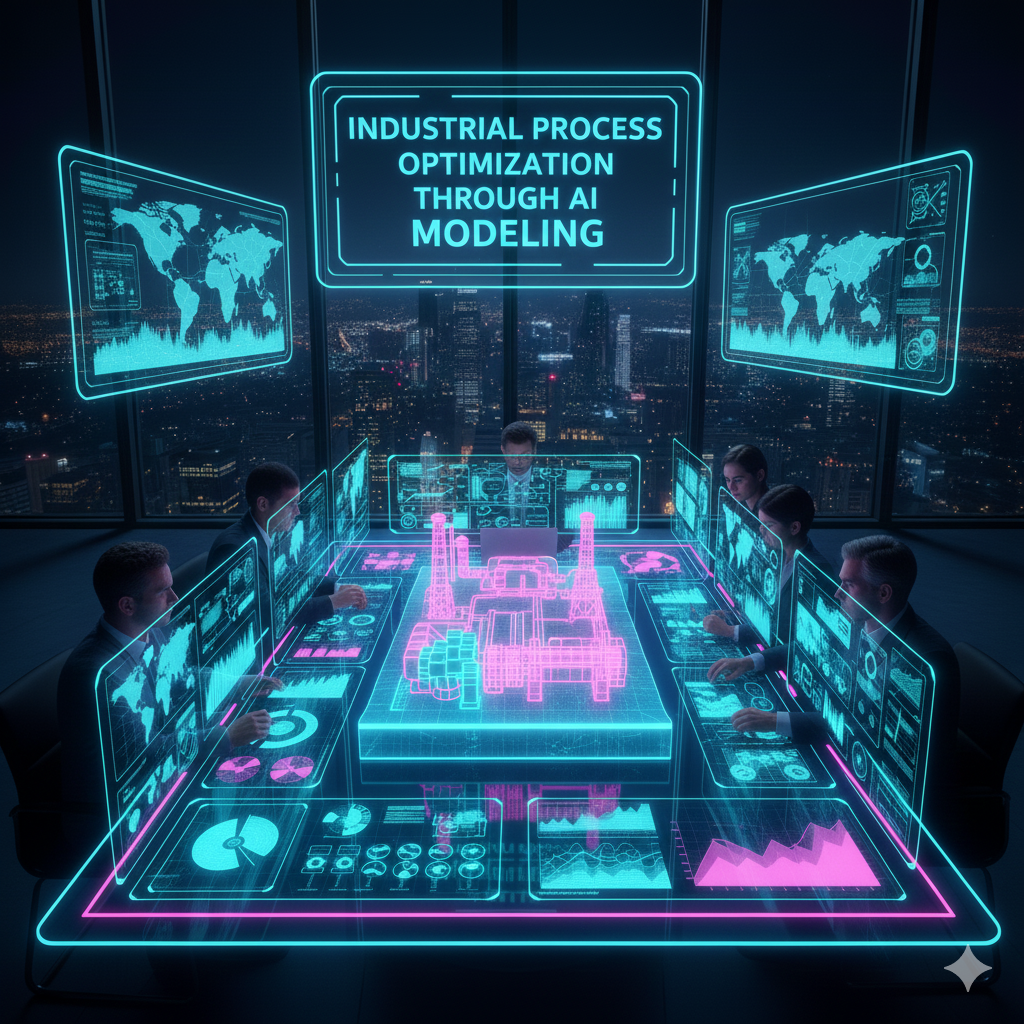
Industrial Process Optimization Through AI Modeling
Through the provision of tools for process optimization, productivity improvement, and cost reduction, artificial intelligence (AI) is seeing a fast transformation in the operations of industrial businesses. Artificial intelligence modeling enables businesses to assess complicated processes, identify bottlenecks, and adopt predictive tactics in a wide variety of sectors, including manufacturing, chemical production, energy generation, and logistics, among others. Through the use of machine learning algorithms, simulation models, and real-time data analytics, businesses are able to make well-informed choices that result in increased production, less waste, and maintained product quality.
Utilizing Artificial Intelligence Modeling in Manufacturing Operations
In order to generate digital representations of industrial processes, artificial intelligence modeling makes use of both historical and real-time data. The behavior of equipment, manufacturing lines, and complete workflows is simulated by these models under a variety of different scenarios. Through the analysis of the results of these simulations, artificial intelligence is able to anticipate system faults, provide recommendations for operational improvements, and optimize resource allocation. Artificial intelligence, in contrast to more conventional techniques of process optimization, is able to continually learn from fresh data, which allows it to improve accuracy and provide adaptable solutions that can cope with shifting operating situations.
Identifying Bottlenecks in the Operational Process
AI modeling has the potential to identify inefficiencies inside industrial processes, which is one of the most significant advantages of this technology. Data from production may be analyzed by algorithms, which can then be used to discover slowdowns, equipment that is not working as expected, or workflow imbalances that are reducing overall efficiency. The managers are able to undertake specific interventions, such as rescheduling production jobs, reallocating personnel, or improving equipment, after they have identified the bottlenecks that are causing the problems. This results in operations that run more smoothly, cycle durations that are shorter, and improved throughput without necessarily leading to an increase in the amount of energy used or the amount of personnel expenses.
Equipment Management and Predictive Maintenance Trustworthiness
Beyond the improvement of workflows, artificial intelligence modeling also includes the predictive maintenance of industrial gear. By evaluating sensor data, patterns of machine use, and past maintenance records, artificial intelligence is able to anticipate future breakdowns before they really take place. It is possible for maintenance personnel to undertake proactive repairs if they notice early signs of equipment wear, overheating, or performance deviations. This helps to reduce both downtime and the costs associated with maintenance. This predictive method improves operational dependability and guarantees that activities continue without interruption, which is essential for businesses that operate with manufacturing lines that are continuous.
Management of resources and energy efficiency management
The procedures that are used in industry often use substantial quantities of both energy and raw materials. For the purpose of optimizing resource use, artificial intelligence models may analyze energy trends, material flow, and process factors. The use of machine learning algorithms allows for the identification of possibilities to minimize waste, alter process parameters, and enhance energy efficiency without affecting the quality of the product itself. By incorporating artificial intelligence into the management of energy and resources, businesses are able to realize cost savings, decrease their effect on the environment, and fulfill sustainability standards while simultaneously maintaining high levels of productivity.
Quality Control and Maintaining Consistency in Products
The use of AI modeling is also an important factor in ensuring that product quality is maintained consistently. Artificial intelligence systems are able to identify deviations that may have an impact on product standards by first monitoring production variables in real time and then comparing those variables with historical data. It is possible for operators to make exact modifications when early detection is performed, which helps to ensure that goods fulfill requirements and reduces the number of faults. Improved customer satisfaction and reduced expenses related with rework or product recalls are two benefits that may be achieved via continuous quality monitoring.
Optimizing the Scheduling of Production Operations and the Supply Chain
Forecasting demand, evaluating inventory levels, and managing the flow of materials are all ways that artificial intelligence modeling may help enhance production scheduling. AI helps managers create effective workflows that limit downtime, cut storage costs, and assure timely delivery of products by simulating alternative production situations. This helps managers ensure that things are delivered on time. Companies are also able to adapt rapidly to swings in the market, preserve flexibility in production capacity, and eliminate bottlenecks in the supply chain when they have optimized their schedule.
AI Integration Into Industrial Internet of Things Systems
Through the combination of artificial intelligence (AI) and platforms for the Industrial Internet of Things (IIoT), a linked environment for the optimization of processes is created. Intelligent systems are able to provide actionable insights by analyzing continuous data streams that are provided by sensors that are incorporated in equipment. Because of this connectedness, modifications may be made in real time, decisions can be made in advance, and adaptive control can be exercised across many production lines. The integration of artificial intelligence and industrial internet of things (IIoT) improves operational transparency by allowing managers to remotely monitor performance and react proactively to possible problems.
Adaptive learning and continuous improvement are two concepts.
The use of adaptive learning allows artificial intelligence models to constantly develop, making use of fresh data to better predictions and suggestions. The optimization of industrial processes is maintained as a result of this, even in the event that production circumstances, material qualities, or operational needs undergo changes. Artificial intelligence-driven optimization results in the creation of a self-improving system that, over time, boosts productivity, lowers operational risk, and provides support for strategic growth objectives.
Through the provision of predictive insights, the identification of bottlenecks, the enhancement of energy efficiency, and the guarantee of consistent product quality, artificial intelligence modeling is changing the optimization of industrial processes. Its integration with real-time data and technologies for the Industrial Internet of Things enables businesses to operate with better accuracy, at lower costs, and with greater flexibility. In order to preserve competitiveness, increase sustainability, and achieve long-term operational excellence, industrial operations will increasingly depend on these intelligent models as artificial intelligence technologies continue to evolve.