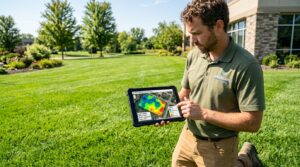
How AI Is Bridging the Gap Between Data and Actionable Insights

How AI Is Bridging the Gap Between Data and Actionable Insights
Modern businesses create enormous amounts of data from a variety of sources, such as their operations, interactions with customers, supply chains, and trends in the market. Collecting data, on the other hand, is merely the first step; the far more difficult problem is transforming that data into insights that can be put into action and that may lead to productive choices. Through the analysis of complicated datasets, the recognition of patterns, and the transformation of raw data into suggestions that are relevant and actionable, artificial intelligence is helping to close this gap. Because of this skill, firms are able to make choices that are quicker, more intelligent, and more informed.
Transformation of Unprocessed Data into Patterns That Have Meaning
Artificial intelligence algorithms evaluate big datasets that include a wide variety of information in order to recognize patterns, correlations, and anomalies that are not immediately obvious to people. Artificial intelligence gives clarity and context by transforming unstructured data into structured insights. Businesses are able to immediately comprehend what the data represents and how it is connected to the success of their operations, the behavior of their customers, or the circumstances of the market.
Analytics that are both predictive and prescriptive
Artificial intelligence provides predictive and prescriptive analytics in addition to recognizing patterns. Prescriptive algorithms provide recommendations for the most effective activities to take in order to attain the intended outcomes, while predictive models make predictions about future events based on previous data. Data is transformed from a static resource into a dynamic decision-making tool as a result of this transformation. The capacity to foresee difficulties and address them in a proactive manner rather than a reactive one is gained by organizations.
Choice-Making Assistance in Real Time
In order to provide quick insights that may assist operational choices, artificial intelligence systems are able to evaluate streaming data in real time. This skill is particularly important in sectors like manufacturing, shipping, banking, and healthcare, where delays may result in significant financial losses. For the purpose of ensuring that judgments are based on the most recent information that is available, real-time analysis is used.
Generation of Insights Through Automation
When dealing with huge datasets, manual analysis is not only time-consuming but also prone to mistakes. Artificial intelligence (AI) is able to automate the process of extracting insights by continually monitoring data, using sophisticated analytics, and creating suggestions that may be implemented. Automation reduces the amount of time it takes to make decisions and frees up human analysts to concentrate on higher-value jobs and strategic planning.
The Process of Recognizing Unknown Risks and Opportunities
The power of artificial intelligence to recognize small patterns helps businesses to discover opportunities and hazards that may otherwise go undiscovered with the help of AI. Artificial intelligence allows for the identification of areas in which actions may have the most influence, whether it be the identification of new market trends, the optimization of resource allocation, or the detection of operational inefficiencies. These insights may be used by organizations in order to create a competitive edge for themselves.
insights that are both personalized and aware of context
Taking into consideration the context, goals, and objectives, artificial intelligence generates insights that are tailored to individual users, departments, or business units. Because of this customization, suggestions are guaranteed to be relevant, conducive to action, and in line with the reality of the business. Those in charge of making decisions are provided with direction that is both appropriate and instantly possible.
Data Integration Across Different Silos
A common challenge faced by large businesses is the fragmentation of data among a number of different departments and platforms. These various data sources are brought together by artificial intelligence, which results in a unified perspective and ensures that insights are complete. By breaking down silos, companies are able to avoid making judgments based on partial datasets and instead base their decisions on the whole spectrum of information that is accessible.
Improvements in Accuracy While Decreases in Bias
Artificial intelligence models apply consistent analytical reasoning to data, hence lowering the chance of human mistake or interpretation that is subjective. In addition, sophisticated algorithms have the potential to recognize and eliminate biases included inside datasets, hence enhancing the dependability of insights. Organizations gain more confidence in the suggestions that are produced by AI since they are objective and actionable.
Long-Term Effects on the Decision-Making Process in Businesses
AI is able to revolutionize the way in which businesses function and compete by bridging the gap between data and insights that can be put into action. The process of making decisions becomes more expedient, clearer, and founded on facts. Over the course of time, insights generated by artificial intelligence make it possible for businesses to react proactively to changes in the market, improve performance, and open new prospects for development. When data is transformed into a strategic driver of corporate performance, it emerges from its previous role as a passive resource.