Automating Material Waste Calculations in Residential Construction Using AI Estimation Tools
Automating Material Waste Calculations in Residential Construction Using AI Estimation Tools
There are many difficulties associated with the waste of materials in residential building projects. These difficulties may have a substantial influence on finances, deadlines, and the environmental sustainability of the project. Methods of estimating that are considered traditional depend on manual computations, assumptions based on previous experience, and static formulae, all of which may not correctly represent the circumstances that exist in the actual world. These methods often result in the over-ordering of supplies or the under-estimating of their quantities, which in turn leads to needless expenses or delays in the project. As a result of the development of artificial intelligence, experts working in the construction industry are increasingly using AI estimating tools in order to automate and improve waste estimations. The data from the project, the design specifications, and the historical patterns are analysed by these systems in order to provide more accurate predictions about the material needs. The use of resources may be optimised, and extra waste can be reduced, if builders use as little guessing as possible. This transition toward estimating that is driven by data is causing a transformation in the way that residential building projects are planned and carried out. An increasing number of contemporary construction processes are beginning to recognise the importance of artificial intelligence (AI) technologies as a vital asset.
Acquiring Knowledge about Artificial Intelligence Estimation Tools in the Construction Industry
Machine learning techniques are used by artificial intelligence estimating tools in order to analyse building blueprints, material requirements, and previous project data. Architectural blueprints, digital models, and project documentation may all be interpreted by these systems, which then extract pertinent information regarding the amounts of materials. Artificial intelligence systems go through enormous datasets in order to identify patterns and connections, in contrast to manual estimate, which is dependent on human judgement. The ability to make more precise projections of material requirements and possible waste is enabled by this. Through the process of learning from finished projects and the results of real-world scenarios, the system is able to constantly increase its accuracy. When it comes to home building, this implies that estimates for materials like concrete, timber, plasterboard, and roofing components will be more credible. Building contractors may save time and minimise the number of mistakes they make by automating the estimating process. An important step forward in the development of construction technology is represented by the use of artificial intelligence into estimate procedures.
The Most Important Factors That Affect Material Waste
Multiple variables, many of which are difficult to measure manually, have an impact on the amount of material waste that occurs in the building industry. There are a number of factors that lead to excessive material utilisation, including design complexity, measurement mistakes, and circumstances on-site. Cutting patterns, mistakes made during installation, and damage that occurs during transit may all contribute to an increase in waste levels. Environmental elements, such as the weather conditions, have the potential to influence the performance and utilisation of materials. These aspects are taken into consideration by AI estimating systems, which do so by analysing historical data and facts that are relevant to the project. This makes it possible to do calculations that are more accurate and that match real building circumstances. It is possible for builders to apply measures to reduce waste if they have a thorough grasp of the factors that lead to waste. The accurate calculation of waste is necessary for both the management of costs and the maintenance of sustainability. Artificial intelligence offers a complete solution to the problems that have been identified.
Utilising Artificial Intelligence to Automate Quantity Takeoffs
When it comes to construction planning, quantity takeoffs are an essential component. These takeoffs include the computation of the material quantities that are necessary for a project. This procedure has traditionally been carried out manually by analysing designs and specifications, which may be a time-consuming process that is also prone to mistakes. To automate the process of quantity takeoffs, systems driven by artificial intelligence collect data straight from digital blueprints and models. These systems have the capability to detect dimensions, materials, and structural components by using computer vision and data analysis. The computations are guaranteed to be precise and consistent thanks to this automated software. In addition to this, it enables estimators to concentrate on more advanced planning rather than jobs that are repetitious. Automated takeoffs provide a considerable reduction in the amount of time required for preparation in residential building projects. Because of this, the beginning of the project is accelerated, and efficiency is increased. Construction operations in the present era are significantly influenced by automation.
Helping to Cut Down on Cost Overruns and Overordering
Overordering materials is a major problem in the construction industry, and it is often utilised as a defensive mechanism against uncertainty. In spite of the fact that this strategy lowers the likelihood of shortages, it results in higher prices and more waste than necessary. Estimation solutions powered by artificial intelligence resolve this issue by delivering accurate material projections that are based on data-driven research. Builders are able to avoid spending money that is not essential if they connect their orders with the real demands of the project. A reduction in the risk of cost overruns, which may have an effect on the profitability of a project, is another benefit of accurate estimates. When the circumstances of a project change, artificial intelligence systems are able to continually update their projections, which ensures that material planning stays correct. Better financial control may be achieved during the whole lifespan of the project by using this dynamic strategy. Eliminating waste is directly proportional to increasing profit margins for construction companies and real estate developers. The ability to effectively handle materials is very necessary in order to preserve a competitive edge.
Improving the Effectiveness of Resource Distribution and Efficiency on-Site
The efficiency of the work site and the distribution of resources are directly influenced by the accuracy of the material estimate. It is possible for building operations to progress without any delays taking place when the supplies are available in the appropriate quantity at the appropriate time. Artificial intelligence solutions assist to guarantee that supplies are supplied in accordance with project timelines, therefore keeping interruptions and downtime to a minimum. Through the use of this , teams are able to enhance their efficiency and sustain constant improvement. In addition, the correct distribution of resources reduces the instances in which changes or emergency orders are required at the eleventh hour. The overall coordination of the project may be improved by the builders if they optimise the flow of materials. AI-driven insights allow for more efficient planning of the utilisation of both labour and equipment. This results in activities occurring more smoothly and a better level of productivity on-site. The management of resources in an effective manner is an essential component of successful building projects.
Encouragement of Environmentally Responsible Building Practices
When it comes to residential construction, sustainability is becoming an increasingly essential factor, and one of the most important aspects of ecologically responsible building practices is the reduction of material waste production. Artificial intelligence estimate tools are used to minimise waste by delivering precise computations and minimising the utilisation of extra material. Not only does this bring down expenses, but it also lessens the influence that building operations have on the surrounding environment. An efficient use of materials lowers the demand for raw resources and minimises the amount of trash that is disposed of in landfills. AI systems are also able to provide recommendations for alternate building processes or materials that are more environmentally friendly. When builders include sustainability factors into the estimating process, they are able to match themselves with the standards of regulatory agencies and the expectations of the market. It is a demonstration of a commitment to responsible building to use solutions powered by artificial intelligence. It is beneficial to both the environment and the company to take this strategy.
Establishment of Integration with Building Information Modelling Systems
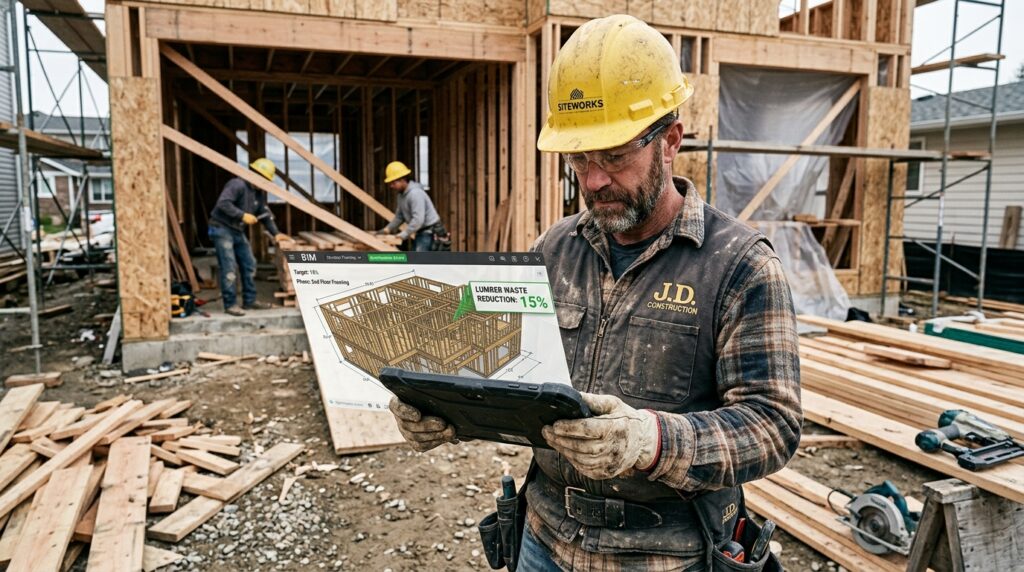
Building Information Modelling (BIM) systems are rapidly being combined with artificial intelligence estimating tools, which results in the creation of a single platform for the planning and execution of projects. Detailed digital representations of building projects, including geometry, materials, and structural components, are provided via Building Information Modelling (BIM). AI technologies make use of this data in order to do correct calculations about materials and predictions regarding waste. The process of integration guarantees that the estimates are in accordance with the most recent designs for the project. Changes made to the model are automatically reflected in the calculations of the materials, which helps to reduce the likelihood of inconsistencies occurring. The continuous flow of data between contractors, engineers, and architects makes cooperation between these three groups more effective. Construction teams are able to attain more accuracy and efficiency when they combine BIM with artificial intelligence. In the realm of construction management, this integrated approach effectively embodies the future.
The Emerging Trends in Artificial Intelligence-Driven Construction Estimation
Increasingly, developments in artificial intelligence and data analytics are having a significant impact on the future of construction estimating. In the future, it is anticipated that new technologies will significantly improve the accuracy and capability of artificial intelligence estimate tools. For instance, predictive analytics may make it possible to make modifications in real time depending on the circumstances of the site and the progress of the project. The integration of Internet of Things devices might give constant data on the use of materials and the creation of trash. The use of augmented reality in artificial intelligence systems might potentially be used in order to see material needs and possible waste locations. There will be a further increase in the use of these advances throughout the home building industry as they become more accessible. Builders that use these technologies will be better placed to control costs and enhance efficiency by using these technologies. The development of estimate methods that are powered by artificial intelligence represents a fundamental shift in the building sector.