Using Computer Vision to Inspect Wind Turbines and Solar Panels
Using Computer Vision to Inspect Wind Turbines and Solar Panels
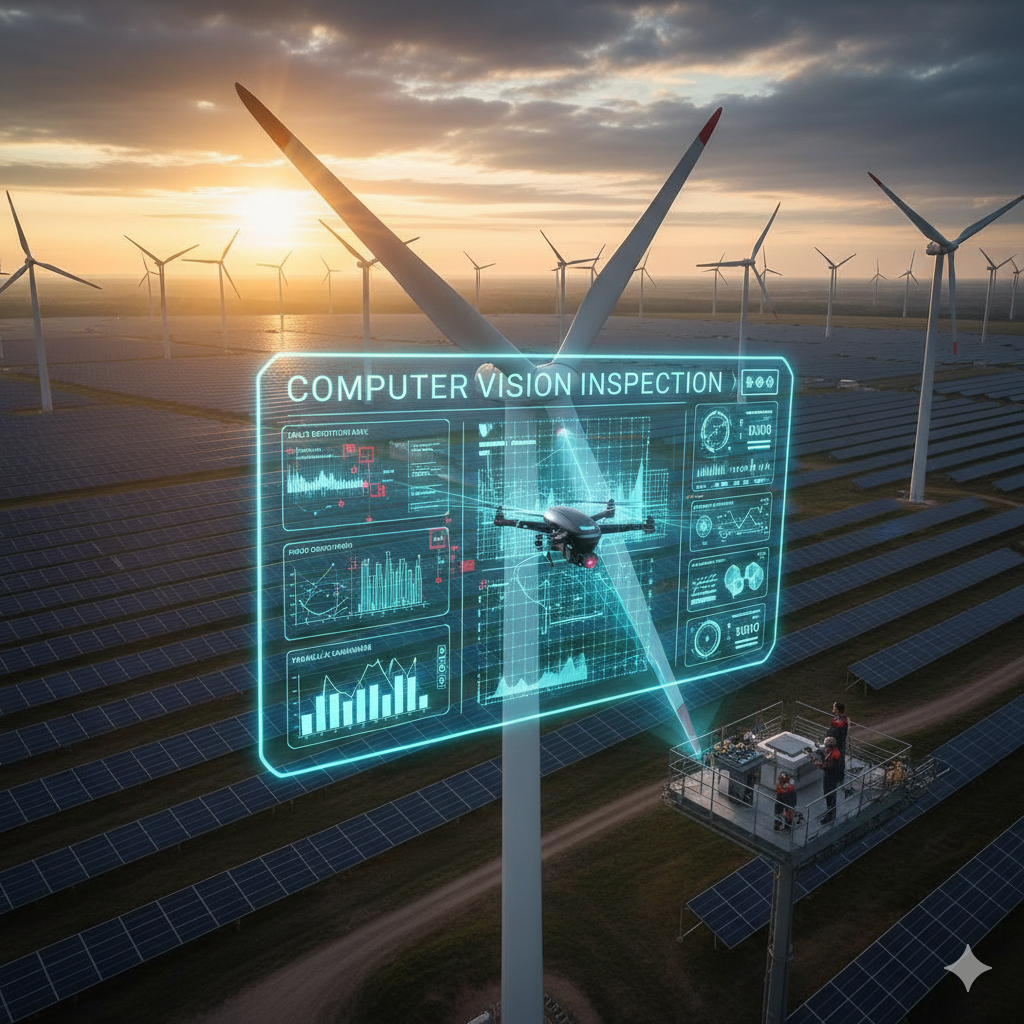
It is essential to execute routine maintenance on renewable energy infrastructure, such as wind turbines and solar panels, in order to guarantee optimum performance, reduce downtime, and prolong the lifetime of assets. Inspections have traditionally relied on manual visual examinations, which are labor-intensive, time-consuming, and often dangerous owing to the fact that they are performed at heights or in distant areas. The use of computer vision technology provides a revolutionary method by automating inspections via the use of artificial intelligence-powered picture and video analysis. Computer vision systems are able to collect comprehensive pictures of solar arrays, turbines, and blades by using several types of cameras, drones, and sensors. Thereafter, artificial intelligence algorithms identify flaws, corrosion, misalignment, dirt buildup, and other irregularities with a high degree of precision. This automation not only enhances the dependability and speed of inspections, but it also lessens the dangers that maintenance staff face and maximizes the effectiveness of operations.
Automated Detection of Material Flaws
On wind turbine blades and structural components, computer vision algorithms are taught to recognize flaws such as fractures, surface erosion, or lightning damage. These problems may be found during the training process. Artificial intelligence has the ability to identify microcracks, damaged cells, shading difficulties, and dirt accumulation among solar panels, all of which affect efficiency. Through the quick analysis of thousands of photos, the system is able to identify areas that need repair before they develop into more significant issues. By detecting problems at an early stage, maintenance costs may be reduced, unplanned downtime can be avoided, and energy production can be maintained in a consistency and efficient manner.
The use of drones for inspections
In order to conduct inspections of renewable energy sources, drones that are fitted with thermal imaging sensors or high-resolution cameras are becoming more popular. By analyzing the photos that are collected by drones, computer vision artificial intelligence enables operators to scan enormous regions in a short amount of time without the need for scaffolding or physical access. A safer, more expedient, and more thorough picture of the equipment may be obtained via the use of drones for inspections, especially in sites that are difficult to access, such as towering wind turbines or huge solar farms.
An Examination of Thermal Imaging
The identification of heat anomalies in solar panels or electrical components of wind turbines is made possible by the integration of thermal imaging with computer vision. In solar panels, hot patches are an indication of defective connections or cells that are not operating properly. On the other hand, overheated components in turbines may indicate that there are mechanical or electrical problems. Artificial intelligence systems evaluate thermal pictures in real time to identify possible issues, which enables focused maintenance and prevents performance decline.
Maintenance that is Predictive
Artificial intelligence technologies provide assistance for predictive maintenance methods by continually monitoring the state of assets via the use of computer vision. Through the use of historical picture data and defect detection patterns, the system is able to forecast both failures and deterioration trends. Maintenance teams have the ability to organize interventions in advance, which allows them to prevent unanticipated failures and maximize the use of available resources. The dependability of renewable energy assets is improved by predictive maintenance, which also increases the operational lifetime of these assets.
The Monitoring of Performance
Not only can computer vision conduct the detection of physical flaws, but it also makes a contribution to the monitoring of performance. Artificial intelligence can evaluate the buildup of dirt or shade on solar panels, both of which diminish energy production. Efficiency may be affected by a number of factors, including blade alignment, surface erosion, and structural deformation in wind turbines. The operators are able to make educated judgments in order to maintain optimum performance and energy yield if they correlate the findings of the inspections with the data associated with the energy production.
Bringing Down the Costs of Operations
A reduction in labor expenses, inspection time, and the need for human interventions may be achieved via the use of computer vision-based automated inspections. When it comes to high-risk locations, fewer workers are necessary, and drones or cameras are able to cover big installations in an effective manner. The early identification of flaws helps to save expensive repairs, reduces the amount of time that the system is down, and guarantees that the production of renewable energy is constant, all of which contribute to improved financial performance.
Compatibility with Asset Management Systems Integration
Data from computer vision may be incorporated into more comprehensive asset management and monitoring systems, which results in the creation of a centralized platform for the planning of maintenance, the recording of historical information, and the analysis of performance. The ability to evaluate the health of assets over time, prioritize maintenance chores, and make data-driven investment choices for replacements or upgrades is extended to operators via the use of reports and visual documentation provided by artificial intelligence.
Improvements in both Safety and Productivity
Computer vision that is powered by artificial intelligence reduces the amount of time that people are exposed to potentially dangerous locations, such as turbine towers, high-voltage solar farms, or offshore wind projects. Through the use of automated inspections, the system improves operational efficiency, lowers risk, and guarantees that maintenance resources are utilized in an efficient manner. The operation of renewable energy sources is made more sustainable and dependable when safety enhancements are paired with inspections that are completed more quickly.
In the field of renewable energy, the future of computer vision
Inspectors will be able to identify smaller problems, anticipate failures more precisely, and integrate with real-time monitoring networks as artificial intelligence and computer vision technology continue to progress. Inspection systems will become more autonomous as these technologies continue to advance. The potential uses of this technology in the future may include continuous drone monitoring, fault detection models that may learn on their own, and seamless interaction with predictive maintenance systems. It is anticipated that computer vision will become an essential component of the management of renewable energy sources, including wind and solar assets, in order to guarantee high efficiency, safety, and lifespan.