How Small-Scale Aquaculture Farms Use AI Water Quality Sensors to Prevent Fish Loss
How Small-Scale Aquaculture Farms Use AI Water Quality Sensors to Prevent Fish Loss
When it comes to maintaining appropriate water conditions, which have a direct influence on fish health, growth rates, and total production, small-scale aquaculture farms encounter daily hurdles that are difficult to overcome. These farms, in contrast to huge industrial operations, often depend on human monitoring techniques, which may be inconsistent and reactive rather than proactive. Without timely action, sudden changes in water quality, such as a depletion of oxygen or an imbalance in pH, may result in the fast extinction of fish populations. A growing number of small aquaculture operators are embracing water quality monitoring systems that are driven by artificial intelligence as a result of the advancements in sensor technology and artificial intelligence. The real-time information and prediction alarms that these technologies give enable farmers to take appropriate action at the appropriate moment. It is possible for farms to lessen the hazards associated with human mistake and delayed reactions by automating the monitoring process. Aquaculture is becoming a more data-driven and efficient profession as a result of the use of digital intelligence sensors. This transition is especially beneficial for smaller farms operating with the goal of increasing their output and ensuring their existence.
Recognizing Artificial Intelligence Water Quality Monitoring Systems
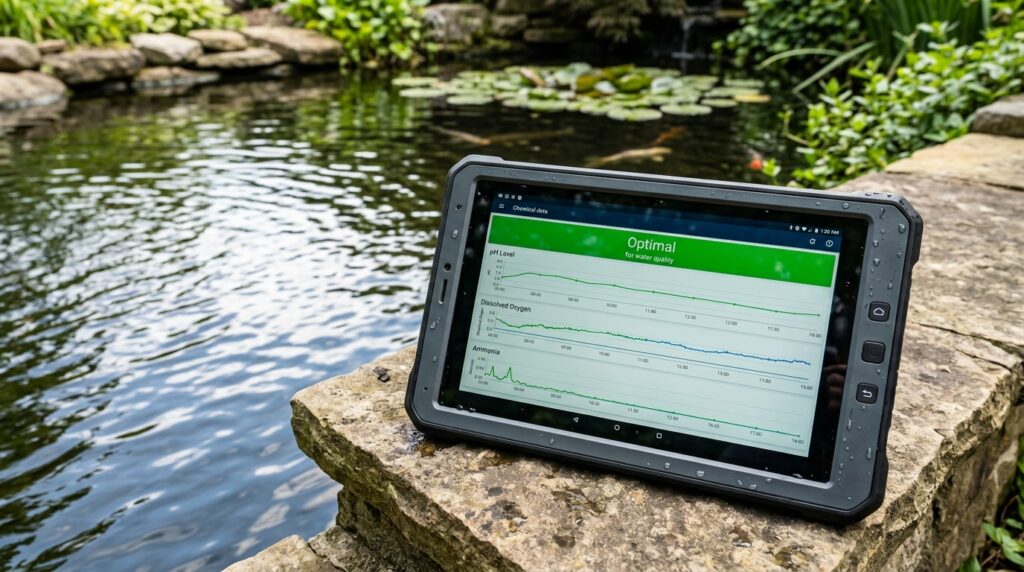
For the purpose of monitoring and analyzing important environmental factors, artificial intelligence water quality monitoring systems integrate physical sensors with machine learning algorithms. Directly put in fish tanks, ponds, or cages, these sensors are able to continually assess a variety of variables, including dissolved oxygen levels, temperature, pH levels, and ammonia content. The data that has been gathered is then sent to a centralised system, where artificial intelligence algorithms examine patterns and identify abnormalities. These systems, in contrast to more conventional monitoring tools, do not only show measurements but also analyze them in the context of the situation. It is possible, for instance, to recognize a potential problem before it becomes serious, such as a progressive decrease in oxygen levels. Farmers are able to foresee difficulties rather than reacting to them because to the predictive capabilities enabled by the artificial intelligence component. This monitoring, which is both continuous and intelligent, guarantees that the water conditions will continue to fall within the ideal limits. Because of this, the health of the fish is better preserved, and losses are reduced to a minimum.
Vital Water Parameters That Have an Effect on the Survival of Fish
There are a number of crucial characteristics that have an impact on the water quality in aquaculture, and they need to be properly adjusted. Because low amounts of dissolved oxygen may rapidly lead to stress and death in fish, it is one of the most critical aspects to consider. Because of the influence that temperature has on metabolic rates and oxygen solubility, it is critical to keep conditions steady. Ammonia, in instance, may be dangerous even at low quantities, and pH levels have an effect on the toxicity of different substances to varying degrees. The species that is being farmed also has a function in determining the turbidity and salinity of the water. Additionally, artificial intelligence sensors monitor all of these characteristics continuously, which provides a full perspective of the aquatic environment. In order to uncover possible dangers that may not be immediately apparent via human observation, the system is able to do an analysis of how these elements interact with one another. By using a comprehensive approach, it is possible to exercise more control over the water conditions. Keeping the parameters at their ideal levels is very necessary in order to guarantee constant growth and survival rates.
Monitoring in Real Time and a Predictive Approach to Risk Management
The capability of artificial intelligence water quality systems to offer alarms in real time is among the most significant characteristics of these systems. In the event that the readings from the sensors depart from the criteria that have been specified, the system will promptly notify the farmer using dashboards or mobile devices. This makes it possible to intervene quickly, such as modifying the degrees of aeration or introducing chemicals specifically for treatment. AI models are able to forecast future dangers based on previous data and present patterns, which goes beyond the ability to provide instant alarms. As an example, in the event that the levels of oxygen are consistently decreasing, the system has the capability to alert the user of the possibility of a prospective Ψحران before it really takes place. This power of prediction allows farmers to take preventative steps rather than reacting to crises, which is a significant advantage. Farms have the ability to greatly reduce the danger of fish loss by minimizing the amount of time it takes to respond. The combination of real-time monitoring and predictive analytics results in the creation of a strong instrument applicable to risk management.
Lessening the Impact of Human Error and Manual Labor
The conventional method of monitoring water quality often includes the use of manual sampling and testing, which may be time-consuming and prone to results that are inaccurate. It is possible that small-scale farms may not have the resources necessary to do regular inspections, which increases the likelihood that problems will go unreported. Artificial intelligence-powered sensors automate this process, therefore delivering constant and accurate data without the need for any involvement from a human. This lessens the amount of work that farm operators have to do, which enables them to concentrate on other important responsibilities. The elimination of discrepancies brought on by human mistake is another benefit of automated systems, which guarantees accurate measurements at all times! These systems provide a level of accuracy that is not attainable via the use of human techniques since they keep a continual watch over the conditions of the water. Consequently, the monitoring procedure has become more effective and reliable as a consequence. It is especially advantageous for farms that have a restricted number of employees to make this transition toward automation.
Enhancing the Effectiveness of Feed and the Rates of Growth
The eating habit of fish and their development performance are both directly influenced by the quality of the water. It is possible for poor circumstances to decrease appetite, delay development, and raise the likelihood of contracting an illness. AI monitoring systems contribute to the maintenance of appropriate conditions, which helps to ensure that fish continue to be healthy and active. In this way, fish are able to make greater use of the nutrients they consume, which ultimately results in improved feed conversion ratios. Additionally, artificial intelligence systems are able to give insights on appropriate feeding times and volumes by monitoring environmental data in conjunction with feeding habits. The result is a reduction in feed waste as well as a reduction in operating expenses. A reduction in production cycles and an increase in yields are both expected outcomes of improved growth rates. These improvements have the potential to make a substantial impact in the profitability of farms that are on a smaller size. To achieve the highest possible level of output, it is essential to keep the water quality constant.
Cost reductions and long-term viability are both important.
In spite of the fact that the initial investment in artificial intelligence water quality sensors could seem to be substantial, the long-term advantages often surpass the expenditures. Because even a single äटना may have an effect on a complete batch, preventing fish loss can result in significant cost savings without any additional effort. Furthermore contributing to cost reductions are the reduction of feed waste, the reduction of labor expenses, and the improvement of efficiency. In addition, the maintenance of consistent water conditions decreases the need for chemical treatments and emergency interventions. Not only does this save costs, but it also helps to promote agricultural techniques that are more environmentally friendly. Farms are able to run more effectively while having a less impact on the environment if they optimize their resource use. Increased productivity and decreased losses are two indicators that gradually reveal the return on investment over the course of time. AI technology makes it possible for smaller farms to attain a level of efficiency that was previously only possible for larger enterprises.
Utilization of Intelligent Aquaculture Systems Integration
The use of artificial intelligence water quality sensors into advanced aquaculture systems is becoming more common. In order to establish an automated ecosystem, these systems may link a variety of components, including filtration units, feeders, and aerators. It is possible for sensors to activate automatic reactions when they detect changes in the conditions of the water. These responses may include boosting the supply of oxygen or altering the flow of water. By reducing the amount of human intervention that is required, this degree of integration provides a quick reaction to changes in the environment. For the purpose of gaining a more profound understanding of farm performance, it is possible to conduct an analysis on data acquired from various sources. The use of cloud-based technologies gives farmers the ability to remotely monitor their activities, which improves both convenience and control. This integrated technique converts conventional aquaculture into a system that is intelligent and responsive. Integration of this kind provides a scalable route toward modernization for farms operating on a smaller scale.
Artificial intelligence-driven aquaculture management: a look forward
It is becoming more clear that developments in artificial intelligence and sensor technologies will have a significant impact on the future of aquaculture. There is an expectation that new developments will improve the precision and capability of water quality monitoring systems. By way of illustration, more sophisticated machine learning models would be able to generate more accurate forecasts of changes in the environment and the behavior of fish. There is potential for additional improvement in risk management via the integration of satellite data and weather predictions. It is also possible for AI systems to include computer vision in order to visually monitor the health and activity of fish. The use of technology among small-scale farms will continue to increase as there is a decrease in the cost of the technology. Because of these advancements, farmers will be able to increase their level of accuracy and trust in their operations. Redefining aquaculture techniques is likely to be a result of the continued development of AI-driven solutions. Agricultural operations that adopt these technologies will be better able to assure their continued profitability and sustainability over the long run.