How Local Independent Pharmacies Use AI to Predict Seasonal Medication Shortages
How Local Independent Pharmacies Use AI to Predict Seasonal Medication Shortages
There are sometimes considerable obstacles that local independent pharmacies confront when it comes to ensuring regular pharmaceutical supply, particularly amid swings in demand that occur over the seasonal cycle. It is possible for supply chains to be swiftly disrupted and for stock shortages to occur as a result of unexpected outbreaks, peak allergy seasons, and cold and flu seasons. Traditional methods of inventory management depend on historical averages and human forecasting, both of which may not effectively reflect changes in demand in real time. As a consequence of this, pharmacists face the danger of either running out of necessary prescriptions or overstocking goods that are less lucrative. With the introduction of predictive capabilities, artificial intelligence is now undergoing a transformation in the way that these organisations manage their inventories. By analysing trends in demand, supplier behaviour, and external factors, artificial intelligence systems are able to forecast shortages before they really exist. By using this preventative strategy, pharmacies are able to alter their orders and ensure that they have sufficient stock levels. The use of artificial intelligence may greatly increase the operational robustness of independent operators. In a market for healthcare that is highly competitive, the capacity to anticipate and react to shifts in demand is becoming an increasingly important competitive advantage.
Comprehending the Role of Artificial Intelligence in Pharmacy Inventory
The use of artificial intelligence (AI) in the process of predicting pharmacy inventory entails the utilisation of machine learning algorithms to analyse big datasets and anticipate demand. The purpose of these systems is to discover reoccurring oscillations by processing previous sales data, trends in prescriptions, and seasonal patterns. Artificial intelligence, in contrast to more conventional methodologies, is able to identify subtle connections and developing patterns that may not be immediately apparent via human examination. The system is always gaining knowledge from fresh data, which allows it to improve its predictions over time. This flexibility guarantees that projections will continue to be useful even if the circumstances of the market stay same. Independent pharmacies will benefit from this since it will allow for more precise planning and a decreased dependence on guessing. Artificial intelligence-driven forecasting offers a framework for inventory choices that is supported by data. With the use of sophisticated analytics, pharmacies are able to better match their inventory with the real demand for their products. This ultimately results in increased productivity and happiness among customers.
Several Important Factors That Affect the Demand for Seasonal Medication
There are a number of variables that go beyond basic historical tendencies that have an impact on the seasonal demand for medications. Changing temperatures and the quality of the air may have an effect on the number of people who are sick, therefore the weather conditions play a significant part in this. In addition, demand surges are caused by public health trends, such as the breakout of the flu or the onset of allergy seasons. In addition, buying habits are influenced by demographic variables such as the distribution of ages and the population density of the local municipality. Systems that use artificial intelligence include these elements into their models, which results in a more thorough knowledge of the factors that drive demand. Increased prediction accuracy may be achieved by the use of external data sources, such as epidemiology reports and climatic forecasts. AI has the ability to develop demand estimates that are more accurate by analysing all of these aspects together. Utilising this comprehensive approach helps pharmacies to adequately plan for changes that occur throughout the year. In order to avoid supply shortages, it is vital to have a solid understanding of the demand drivers.
Identification of Shortages Prior to Their Occurrence
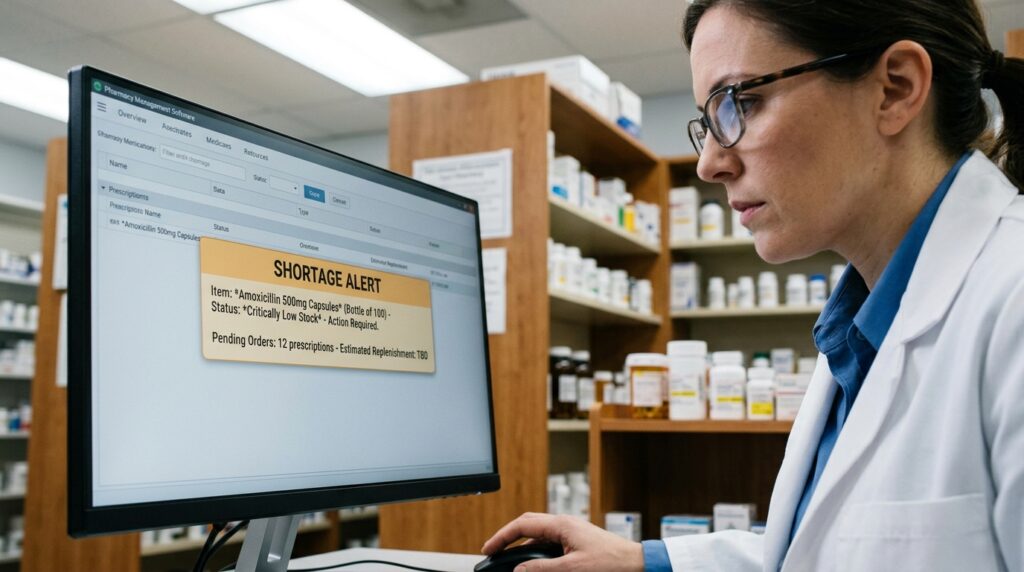
The capacity of artificial intelligence to anticipate shortages before they occur is among the most useful qualities it has in the field of pharmacy administration. The possibility for supply gaps may be identified by artificial intelligence systems via the analysis of patterns in sales, delivery schedules from suppliers, and inventory levels. In the event that the demand for a certain drug is increasing at a rate that is higher than anticipated, for instance, the system might notify the pharmacy to raise the quantity of orders. In a similar vein, it is possible to identify shipping delays caused by suppliers and include them into forecasts. These early alerts provide pharmacists the opportunity to take preventative steps, such as locating alternative suppliers or altering the quantities of inventory they have on hand. Insights that are predictive lessen the likelihood of unexpected stockouts, which may cause disruptions in patient care. This capacity is essential for independent pharmacies to have in order to fulfil their dependability obligations. It is important to anticipate shortages so that crucial drugs may continue to be supplied when they are required.
Improving the Coordination and Ordering Process with Suppliers
When it comes to maintaining constant inventory levels, one of the most important components is effective supplier collaboration. When it comes to ordering and scheduling, artificial intelligence technologies improve this process by delivering suggestions that are informed by data. Through the examination of the performance of suppliers and the patterns of delivery, the system is able to determine which sources are the most trustworthy for certain drugs. It also has the capability of recommending ideal reorder spots depending on the anticipated demand. The chance of either over-ordering or under-ordering increases as a result of this. Ordering procedures that are automated further simplify operations and reduce the amount of labour that is done manually. When it comes to independent pharmacies, enhanced supplier cooperation results in supply chains that maintain more stability. The insights generated by AI make it possible to negotiate and prepare more effectively with suppliers. As a consequence, inventory management becomes more effective, and the risk associated with operations is decreased.
Finding ways to cut down on waste and obsolete stock
Keeping an excessive amount of pharmaceuticals on hand might result in waste, especially for those that have a short shelf life. It is not only a financial loss to have expired inventory, but it also has to be disposed of in an appropriate manner, which adds to the expenses of operations. Through the process of matching inventory levels with real demand, AI forecasting helps to minimise the impact of this problem. The ability to anticipate the quantity of each drug that will be required allows pharmacies to avoid having an excess of stock. The chance of things becoming bad before they are sold is decreased as a result of this practice. Additionally, effective management of inventory has the effect of releasing storage space and enhancing cash flow. When it comes to preserving profitability, minimising waste is very necessary for all small pharmacies. The accuracy that is required to strike a balance between availability and minimum excess is provided by AI systems. Consequently, this helps to the sustainability of both the economy and the environment.
Improving the Trust of Customers and the Dependability of Service
The availability of medication is an essential component in ensuring the happiness and trust of customers. When it comes to providing important medications without any delay, patients depend on pharmacies. Frequent stockouts may be detrimental to a company’s image and cause consumers to switch to other brands. Inventory management that is driven by artificial intelligence guarantees that pharmaceuticals that are in high demand are always accessible. Pharmacies are able to provide dependable service by preparing for any shortages and modifying their stock levels accordingly. Customer trust is increased as a result of this dependability, which in turn drives repeat business. A further advantage is that pharmacies are able to give more precise information on the availability of medications and the anticipated dates for replenishing. Enhanced communication contributes to an overall improvement in the customer experience. The establishment of solid connections with customers is essential to the long-term success of independent pharmacies. Through the supply of consistent services, AI contributes to the maintenance of these connections.
Efficiency in terms of costs and benefits to operations
Independent pharmacies may realise huge cost savings by incorporating artificial intelligence into their inventory management systems. It is possible for pharmacies to increase their cash flow and minimise their carrying costs by optimising their stock levels. Because automated procedures reduce the need for physical labour, employees are freed up to focus on tasks that involve interacting with customers. Additionally, predictive analytics helps to limit the number of emergency orders, which are often more costly. Inventory management that is efficient helps to minimise losses that occur as a result of expired items and stock inventory imbalances. These cost reductions, compounded over time, lead to an increase in profitability. Additionally, artificial intelligence technologies provide performance insights that enable pharmacists to discover areas that need additional optimisation. The total operating efficiency is improved as a result of this ongoing constant improvement. The management of costs is a key component of long-term viability for small enterprises. In order to achieve financial stability, artificial intelligence offers a strategic edge.
The Emerging Trends in Artificial Intelligence-Driven Pharmacy Management
The development of artificial intelligence and the integration of data will have a significant impact on the future of pharmacy administration. Through the incorporation of real-time health data and sophisticated analytics, it is anticipated that emerging technologies will improve the accuracy of prediction models. Integration with electronic health records has the potential to give more in-depth insights about the patterns of prescriptions and the requirements of patients. AI technologies may also make it possible to create personalised inventory plans depending on the demographics of the local area. Further improvements in responsiveness and efficiency will be achieved via the automation of supply chain procedures. It is expected that the number of independent pharmacies that embrace these technologies will continue to increase as they become more accessible. The use of artificial intelligence by businesses will make them more able to deal with swings in demand and issues in supply. The pharmaceutical sector is undergoing a tremendous transition as a result of the development of AI-driven inventory management.