AI-Optimized HVAC Systems for Net-Zero Office Buildings
AI-Optimized HVAC Systems for Net-Zero Office Buildings
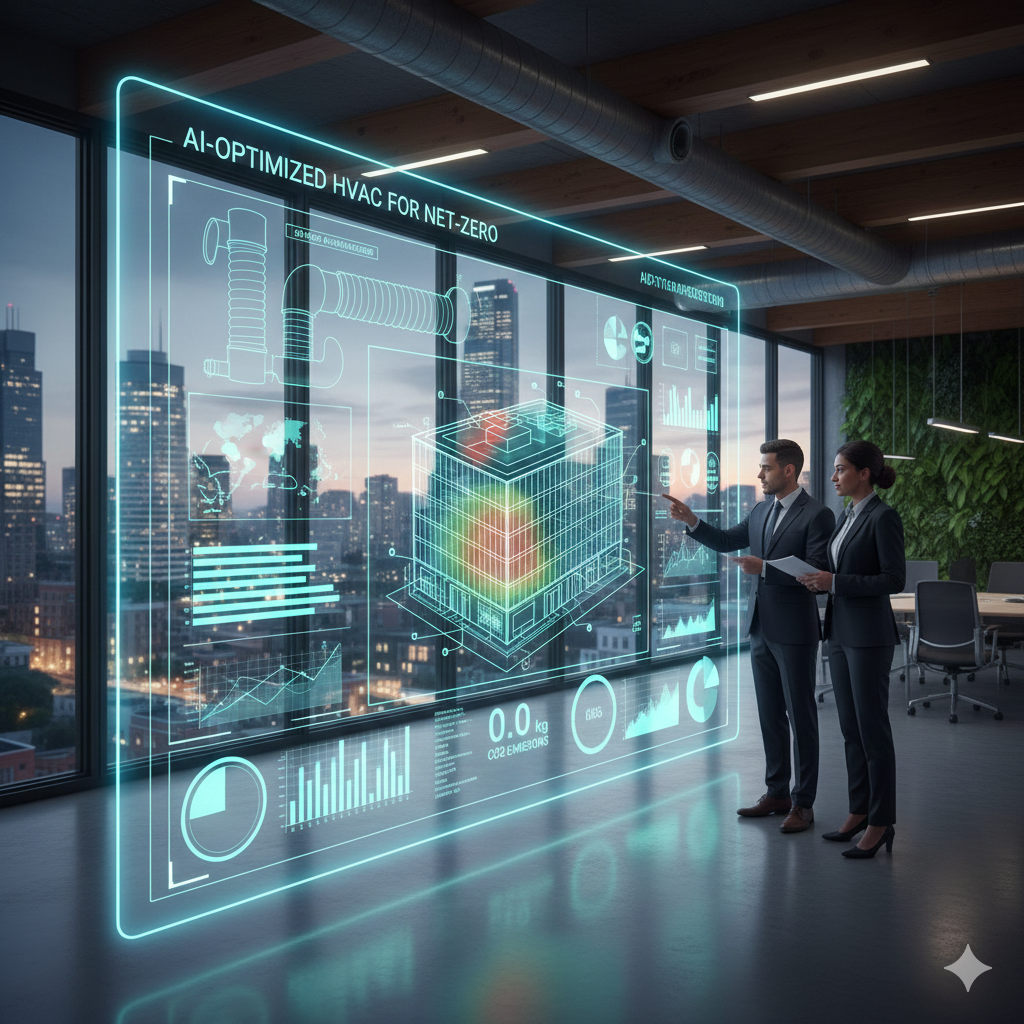
In order to achieve net-zero energy consumption in office buildings, it is necessary to carefully control heating, ventilation, and air conditioning (HVAC) systems. These systems are among the most significant contributors to energy use. Inefficient, energy-wasting, and expensive to maintain, traditional heating, ventilation, and air conditioning (HVAC) systems often work according to predetermined schedules or need human modifications. The control of a building’s environment may be revolutionized by HVAC systems that are optimized using artificial intelligence. These systems continually analyze data from occupancy sensors, weather predictions, indoor air quality monitors, and historical energy use. Dynamic adjustments to temperature, airflow, and ventilation are made by machine learning algorithms to fit real-time circumstances. This ensures that occupants are comfortable while also reducing the amount of energy that is used. AI helps office buildings to function more effectively, cut carbon emissions, and get closer to meeting their objectives of attaining net-zero energy consumption. This is accomplished via the use of predictive analytics and adaptive controls.
Climate Control That Is Predictional
In order to make proactive adjustments to heating and cooling, HVAC systems that are powered by artificial intelligence anticipate changes in occupancy, weather, and patterns of building utilization. It is possible for the system to prepare areas at times of cheap energy costs or when there is an abundance of renewable energy since it is able to foresee peak consumption periods. The use of predictive temperature management helps to minimize the amount of energy that is wasted, ensures that the inhabitants are comfortable, and guarantees that the building functions well throughout the day and throughout the seasons.
Energy Management That Is Dynamic
HVAC systems that are intelligent distribute energy in a dynamic manner depending on the current circumstances of the building. Artificial intelligence is able to manage airflow and temperature for particular regions rather than making uniform modifications because sensors recognize occupied zones, temperature variations, and the quality of the air within by monitoring the air quality. In addition to reducing the amount of energy that is not required, this zone-specific optimization also improves comfort and ensures that resources are focused in the areas where they are required the most.
Compatibility with Alternative and Renewable Energy Sources
In order to satisfy the need for energy, net-zero office buildings often depend on renewable energy sources such as solar panels, wind turbines, and other similar technologies. Artificial intelligence combines the operation of heating, ventilation, and air conditioning (HVAC) systems with the availability of renewable energy sources. This allows for the scheduling of intense heating or cooling during times of plentiful green energy and the adjustment of load during times of lesser supply. In order to achieve the goals of net-zero energy consumption, this synchronization enhances the exploitation of renewable energy sources and reduces dependency on the grid.
Patterns of Occupancy and Adaptive Learning Processes
Artificial intelligence systems are constantly learning from the behavior of occupants, patterns in consumption, and seasonal fluctuations in order to improve HVAC functioning. Through the process of assessing how occupants interact with areas, such as preferred temperature ranges or peak use hours, the system is able to change over time in order to maximize both comfort and efficiency. By ensuring that energy is utilized sensibly rather of depending on static schedules, adaptive learning helps to improve performance over the whole lifespan of the building.
Efforts to Reduce Carbon Footprint
AI-optimized heating, ventilation, and air conditioning (HVAC) systems provide a direct contribution to the achievement of sustainability objectives by reducing the amount of energy and fuel used, hence reducing the emissions of greenhouse gases that are related with the operation of buildings. Increasing the efficiency of heating, cooling, and ventilation systems helps businesses meet their obligations to carbon neutrality while simultaneously reducing energy waste. In order to strike a balance between the comfort of the occupants and the duty to the environment, these solutions are essential in net-zero office buildings.
Utilizing Predictive Maintenance and Identifying Problems
Artificial intelligence is used to continually monitor the functioning of HVAC systems, identifying abnormalities such as inefficiencies in the equipment, leaks, or sensor problems. The site managers are notified of possible problems before they become more severe via the use of predictive maintenance, which helps to reduce downtime, extend the life of equipment, and maintain energy efficiency. Early identification of faults helps to maintain a building’s functionality while preventing expensive repairs from becoming necessary.