Using Computer Vision to Detect Equipment Wear in Independent HVAC Repair Businesses
Using Computer Vision to Detect Equipment Wear in Independent HVAC Repair Businesses
There is a direct correlation between the dependability of the equipment and the level of customer satisfaction and service quality in independent HVAC repair firms. These businesses work in an environment that is highly technical and time-sensitive. When it comes to identifying symptoms of wear and tear in HVAC systems, professionals have traditionally relied on physical examinations and their own personal experiences. However, despite its effectiveness, this strategy may sometimes fail to identify early-stage problems that are not immediately apparent. The ability of these companies to monitor and repair their equipment is now being revolutionized by computer vision, which is driven by artificial intelligence. In the field of heating, ventilation, and air conditioning (HVAC), specialists are able to detect minute changes in components via the use of cameras and image processing algorithms. Reduced downtime and increased service efficiency are also benefits of this proactive strategy. Because of the increasing availability of technology, small HVAC firms are starting to use these technologies in order to maintain their competitive edge. Not only can the use of computer vision improve the accuracy of diagnostics, but it also helps to simplify the processes involved in maintenance.
Acquiring Knowledge of Computer Vision in the Field of HVAC Diagnostics
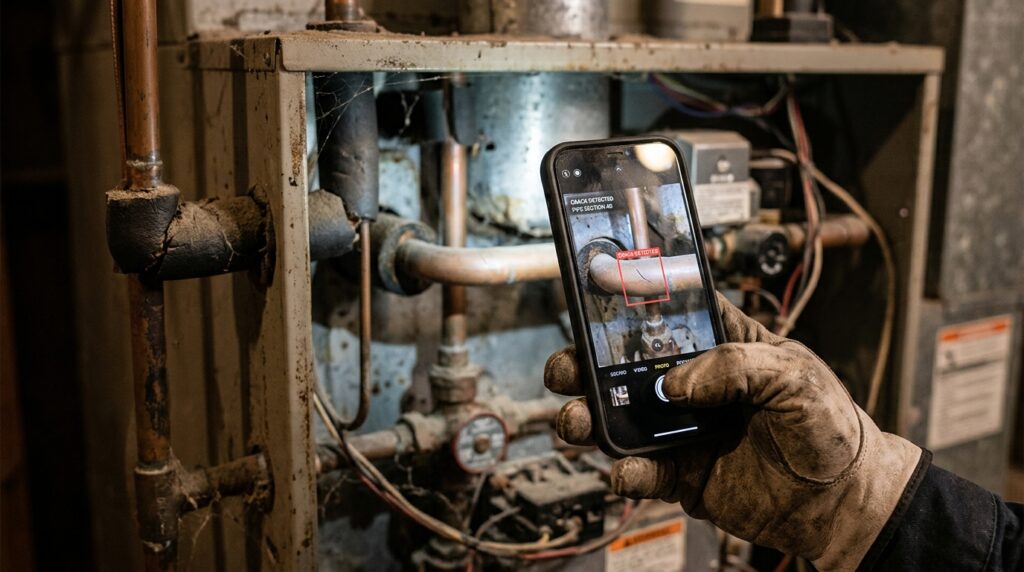
A subfield of artificial intelligence known as computer vision gives computers the ability to comprehend and evaluate visual data derived from video feeds or still pictures using computer vision. When used to the field of heating, ventilation, and air conditioning (HVAC) maintenance, it entails taking pictures of various system components, such as coils, compressors, fans, and ducts, and examining them to look for indications of wear. The training of these systems takes place on vast datasets of photographs of equipment, which enables them to spot patterns associated with corrosion, fractures, dirt accumulation, and mechanical damage. Computer vision, in contrast to human inspection, is able to interpret visual input with great consistency and without experiencing symptoms of weariness. This guarantees that even very small flaws are discovered at an early stage. Utilizing mobile devices, portable cameras, or fixed monitoring systems are all viable options for implementing this technology successfully. Heating, ventilation, and air conditioning (HVAC) companies may increase diagnostic accuracy and lessen their dependence on subjective judgment by automating visual examinations.
Machine learning can detect common types of equipment wear.
Heating, ventilation, and air conditioning (HVAC) systems are susceptible to a variety of wear that may have an effect on their performance and lifetime. When it comes to spotting surface-level concerns, such as rust, corrosion, and physical damage to components, computer vision systems are very successful. In addition to this, they are able to identify irregular patterns such as fan blades that have uneven wear or electrical connections that have discolored. It is possible to readily identify dirt and debris buildup on filters and coils via the use of image analysis. This is because these accumulations often affect efficiency. By identifying visual irregularities in the vicinity of joints and connections, artificial intelligence models may also identify early warning signals of refrigerant leakage. Because of these capabilities, personnel are able to treat issues before they became more serious and required expensive repairs. Through the provision of comprehensive visual insights, computer vision contributes to an overall improvement in the effectiveness of maintenance services. Consequently, this results in HVAC systems that are more dependable and better outcomes for customers.
Integration with Workflows for Field Service Applicants
When it comes to maximize the advantages of computer vision, one of the most important steps that independent HVAC firms can do is to incorporate it into their current processes. Technicians may utilize mobile apps to take pictures during regular inspections, and artificial intelligence systems can subsequently evaluate those pictures in real time. It is possible to include the findings into service reports, which will provide straightforward documentation of the state of the equipment. In addition to enhancing the quality of the records kept internally, this also increases the level of openness with the consumers. It is possible for technicians to be notified of discovered problems via automated notifications, which enables speedier decision-making. Through integration with scheduling systems, companies are able to arrange maintenance visits based on the actual state of their equipment rather than planning them at predetermined intervals. The transition toward condition-based maintenance results in increased efficiency and a reduction in the number of service calls that are not essential. Businesses in the heating, ventilation, and air conditioning industry may develop a workflow that is more efficient and data-driven by integrating computer vision into their everyday operations.
Reduced Downtime Through the Implementation of Predictive Maintenance
The function that computer vision plays in predictive maintenance is really one of the most important benefits that it offers in the field of HVAC repair. Businesses are able to resolve problems before they result in system breakdowns if they regularly monitor their equipment and look for early symptoms of wear. This preventative strategy cut down on downtime and guarantees that heating, ventilation, and air conditioning (HVAC) systems continue to function, particularly during crucial times such as when the weather is very severe. In addition, predictive maintenance helps to cut down on the number of emergency repair visits, which are often more expensive and disruptive. Insights generated by artificial intelligence allow technicians to prioritize high-risk components and schedule interventions at the appropriate time. This not only increases the dependability of the service but also increases the confidence that customers have in the company. Over the course of time, the decrease in unanticipated failures leads to operations that are more efficient and better resource allocation. Predictive maintenance is a transition away from reactive service practices and toward proactive ones.
Reduced expenses and improved operational effectiveness
Computer vision technology has the potential to result in significant cost reductions for independent heating, ventilation, and air conditioning enterprises. Businesses have the ability to protect themselves from costly repairs and increase the lifetime of their equipment if they spot problems at an early stage. A decrease in downtime results in fewer interruptions to service and a greater loyalty from existing customers. The specialists are able to finish a greater number of works within the same amount of time since computerized inspections save them time. Overall productivity and income potential are both increased as a result of this. Additionally, the technology lessens the need for subsequent visits since it allows for the identification and resolution of problems during the first inspection in a more precise manner. These efficiencies, when put into practice over time, lead to higher profit margins. It is a big benefit for small enterprises who are working on limited budgets to have the capacity to maximize the use of their resources. The use of computer vision makes it possible to improve operational performance in a scalable manner.
Building Trust with Customers Through the Use of Visual Reporting
Building trust with consumers is a crucial component, particularly in service-oriented businesses such as HVAC repair, where transparency is an essential component. Businesses now have the ability to offer visual proof of the state of their equipment via the use of computer vision systems, which may produce annotated photographs and reports. Customers are able to view the problems discovered by the AI in a clear and concise manner, which makes it simpler for them to comprehend the need of repairs or maintenance. This results in a decrease in suspicion and an increase in trust in the advice made by the technician. A further benefit of visual reporting is that it assists in educating consumers about the significance of doing routine maintenance. The presentation of data in a style that is both understandable and easily available may help organizations enhance their communication and client engagement. This level of openness distinguishes independent heating, ventilation, and air conditioning enterprises from their rivals. Furthermore, as a consequence of this, clients are more inclined to trust and return to service providers that deliver insights that are both clear and credible.
Obstacles to Overcoming When Implementing Computer Vision Technology
The use of computer vision technology in small HVAC enterprises presents a number of problems, despite the fact that it offers a number of advantages. The preliminary financial commitment that is necessary for the acquisition of software and hardware is one of the key issues. Although there is a general trend toward lower expenses, there are still certain companies that may have trouble justifying the expenditure. A further obstacle is the need for high-quality picture data in order to guarantee correct analysis by the researcher. Erroneous picture capture or inadequate illumination might have an impact on the operation of the system. The training of staff members to make efficient use of the technology is another key component of a successful deployment. As new kinds of equipment and wear patterns arise, it may be necessary to do frequent upgrades on AI models in order to ensure that they continue to be accurate. In order to make educated judgments concerning adoption, it is essential to have a solid understanding of these issues. Nevertheless, we are able to efficiently handle these challenges if we prepare ahead.
Upcoming Developments in Artificial Intelligence-Based HVAC Diagnostics
The development of artificial intelligence and computer vision will have a significant impact on the future of HVAC diagnostics. In order to expand the capabilities of these systems and make them even more precise and efficient, emerging technologies are being used. By way of illustration, integration with Internet of Things sensors has the potential to provide a full picture of the functioning of the equipment by combining visual and operational reports. Monitoring systems that operate in real time may make it possible to conduct continuous analysis of HVAC components without the need for human inspections. The identification of intricate wear patterns will achieve even greater success as a result of developments in deep learning algorithms. The independent heating, ventilation, and air conditioning (HVAC) enterprises will be able to harness these advancements for competitive advantage as they become more available. Redefining maintenance methods in the business is going to be a result of the continued development of AI-driven diagnostics. The companies who are the first to adopt these technologies will be in a better position to provide services that are of a high quality and consistently dependable.