Using Machine Learning to Predict Micro-Climate Irrigation Needs for Commercial Landscapers
Using Machine Learning to Predict Micro-Climate Irrigation Needs for Commercial Landscapers
Landscape projects for commercial purposes can include a wide range of situations, each of which might exhibit substantial variations in soil conditions, solar exposure, and moisture levels within a very short distance. The management of irrigation in an effective manner across different microclimates is a difficult undertaking that has direct implications for the health of plants, the amount of water used, and the expenses of operations. The majority of the time, traditional irrigation systems are dependent on predetermined schedules or human modifications, neither of which may accurately represent the current environmental circumstances. In order to maximise the effectiveness of irrigation techniques, landscapers are increasingly turning to machine learning as water conservation becomes an increasingly crucial issue. The use of artificial intelligence systems enables more accurate and effective watering by analysing environmental data and anticipating the water requirements of specific areas. Using this method helps to cut down on waste while also ensuring that plants get the appropriate quantity of moisture. A scalable answer to a problem that has been around for a long time is provided by these technologies to commercial landscapers who are in charge of maintaining huge properties. As a result of the incorporation of machine learning, irrigation is transitioning from a reactive process to a proactive, data-driven operation.
In the field of landscaping, having an understanding of microclimate variation
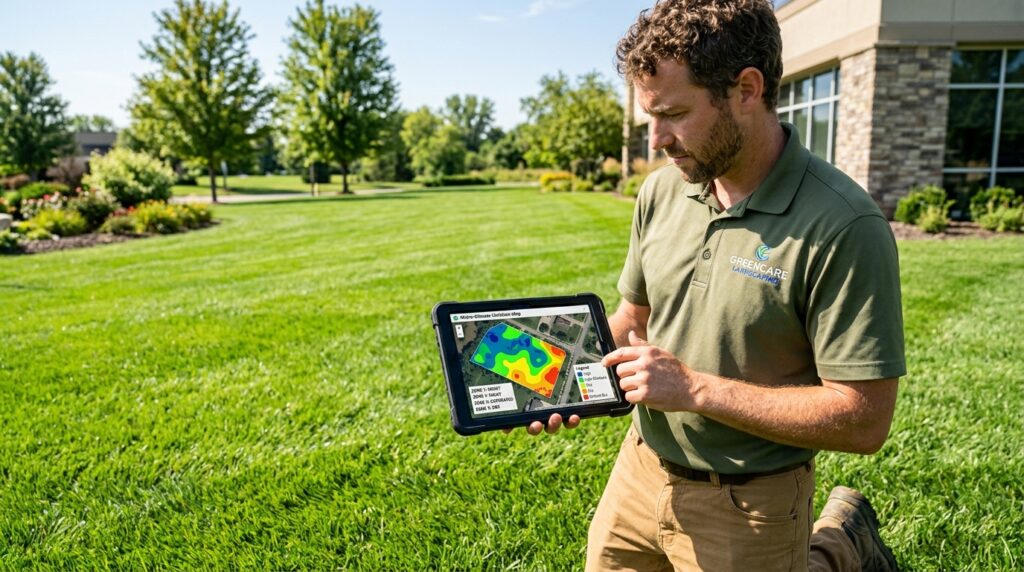
Microclimates are localised climatic circumstances that are distinct from those of the surrounding region. These conditions are often impacted by elements such as distance from the sun, elevation, the makeup of the soil, and the presence of adjacent constructions. It is possible for these variances to exist within a single property in commercial landscapes, which may have an effect on the way water is absorbed and held. For instance, regions that are subjected to direct sunshine may suffer a higher rate of drying out compared to zones that are shaded, and slopes may experience unequal water distribution. In order to effectively manage irrigation, it is vital to have a solid understanding of these variances. Machine learning algorithms examine the data collected from a variety of sensors in order to create a detailed map of these microclimates. Landscapers are able to identify zones that have different watering requirements as a result of this. It is possible to customise irrigation to particular circumstances rather than applying it evenly if these variances are recognised and adjusted accordingly. The tailored strategy promotes plant health and decreases the amount of water that is used that is not essential.
For the purpose of powering machine learning models, data inputs
In order to effectively anticipate the amount of water that will be needed for irrigation, machine learning algorithms need a broad variety of data inputs. These factors include the amount of moisture in the soil, the temperature, the humidity, the amount of sunshine, and the patterns of rainfall. These data are continually collected by sensors that are dispersed around the terrain, which enable them to provide real-time insights into the state of the environment. In order to improve the accuracy of the predictions, historical weather data and seasonal patterns are also taken into consideration. Additionally, in order to predict future situations, several systems include data from other sources, such as weather forecasts. The algorithm is able to give accurate suggestions for watering schedules and quantities when these inputs are combined. It is closely related to the success of the system that the quality and variety of the data are included. The acquisition of the most comprehensive data possible guarantees that the forecasts will be accurate and dependable. The optimisation of irrigation techniques relies heavily on this basis that is driven by data.
What is the Operation of Predictive Irrigation Systems?
In order to analyse environmental data and estimate water requirements for various within a landscape, predictive irrigation systems use machine learning algorithms. For the purpose of determining the appropriate irrigation levels, the system periodically assesses the present circumstances and compares them to the patterns that have occurred in the past. It is possible for the model to automatically change irrigation schedules or activate watering systems when it determines that a particular zone needs to be watered. With this dynamic strategy, water is only provided to plants at the precise moment when they need it. Additionally, the system is able to adjust to changes in circumstances, such as abrupt rises in temperature or a fast increase in rainfall. The necessity for human changes is eliminated by predictive systems since they automate the decision-making process entirely. It is as a consequence of this that irrigation procedures become more consistent and efficient. One of the most significant benefits of machine learning is that it enables humans to anticipate requirements rather than just respond to them.
Reducing the Wastage of Water and Its Impact on the Environment
When it comes to business landscaping, water conservation is an extremely important topic, especially in some countries that are experiencing resource shortages. The use of traditional irrigation techniques often results in overwatering, which leads to the loss of water and the possibility of causing harm to plants. This problem is addressed by machine learning algorithms, which provide accurate quantities of water depending on the real requirements of the situation. The amount of water that landscapers use may be greatly reduced if they refrain from using irrigation that is not essential. Not only does this save operating expenses, but it also contributes to the continuation of environmental sustainability. Another benefit of efficient water usage is that it reduces runoff, which may introduce chemicals and fertilisers into the ecosystems that are nearby. The irrigation system that is powered by AI is in line with the regulatory criteria and the sustainability objectives. Through the use of these systems, firms may show their dedication to the responsible management of their resources. Reducing the influence that humans have on the environment has both economic and ethical benefits.
Improving the Health of Plants and the Quality of the Landscape
When it comes to keeping healthy plants and landscapes that are visually pleasing, it is vital to water them on a consistent and suitable basis. The combination of overwatering and underwatering may result in root illnesses, while the former causes stress and stunts development. By ensuring that each region gets the appropriate quantity of water, machine learning helps to guarantee that plants are in the best possible health. The technique eliminates uneven development and patchwork landscapes by taking into account fluctuations in the microclimate prevailing in the area. As a result of their increased resistance to pests and environmental stress, plants that are healthy need less treatments than those that are not. Enhancing the quality of the landscape contributes to an increase in the total value of commercial properties. Providing landscapers with consistent outcomes is essential to ensuring that their clients are satisfied and continue to use them. Irrigation that is controlled by artificial intelligence maintains high maintenance and aesthetic requirements. Both plants and enterprises will benefit from this in the long run since it leads to better outputs.
Integration of Intelligent Irrigation Systems and Implementation of Automation
Automation capabilities that are able to connect smoothly with machine learning models are being progressively integrated into modern irrigation systems. Sensors, controllers, and valves collaborate in order to assist the artificial intelligence system in making judgements about watering. Because of this connectivity, it is possible to have completely automated watering without the need for ongoing human supervision. Platforms that are hosted in the cloud make it possible for landscapers to remotely monitor and operate their systems, which offers both flexibility and ease. By use of alerts and notifications, operators are kept abreast of any problems or changes in circumstances that may occur. The precision of the system is further improved by integration with other intelligent systems, such as weather stations. This technique, which is linked, ultimately results in an irrigation network that is coherent and responsive. Automation decreases the amount of labour that is required and guarantees that performance is constant. From the perspective of commercial landscapers, this is a substantial advancement in terms of operating efficiency.
Reduced expenses and improved operational effectiveness
The use of machine learning to the control of irrigation systems has the potential to result in significant cost reductions over time. When water use is reduced, utility costs are reduced as well, which may be a considerable benefit for properties that are big. The demand for physical labour is reduced as a result of automation, which enables employees to concentrate on more important activities. A reduction in the expenditures associated with replacements, treatments, and upkeep is another benefit of improved plant health. Predictive systems help reduce the amount of wear and tear on equipment by only working when it is required. Better resource allocation and higher profitability are both outcomes that are a direct result of these improvements. The long-term financial rewards are substantial, despite the fact that initial setup expenses could be a factor to take into mind. It is crucial for commercial landscapers to prioritise the optimisation of their operations in order to preserve their competitiveness. The use of AI-driven irrigation offers a feasible approach to accomplishing these objectives.
The Future of Intelligent Landscaping Technologies and Their Innovations
The development of artificial intelligence and other forms of intelligent technology will have a significant impact on the future of landscaping. The capabilities of machine learning models are anticipated to be improved by emerging breakthroughs, which will result in the models being more accurate and adaptable. The use of satellite images and sophisticated weather forecasting techniques has the potential to provide even more profound insights into the state of the environment. By incorporating predictive maintenance for irrigation systems, artificial intelligence systems have the potential to reduce both downtime and repair costs. The number of commercial landscapers that use technology will continue to increase due to the fact that it is becoming more inexpensive. These developments will enable more precise and sustainable landscape management practices. The ongoing evolution of smart irrigation systems represents a significant transformation in the industry. Businesses that embrace these innovations will be better equipped to deliver high-quality, efficient, and environmentally responsible services.