Healthcare Diagnosis in Seconds: AI Tools Doctors Rely on in 2025
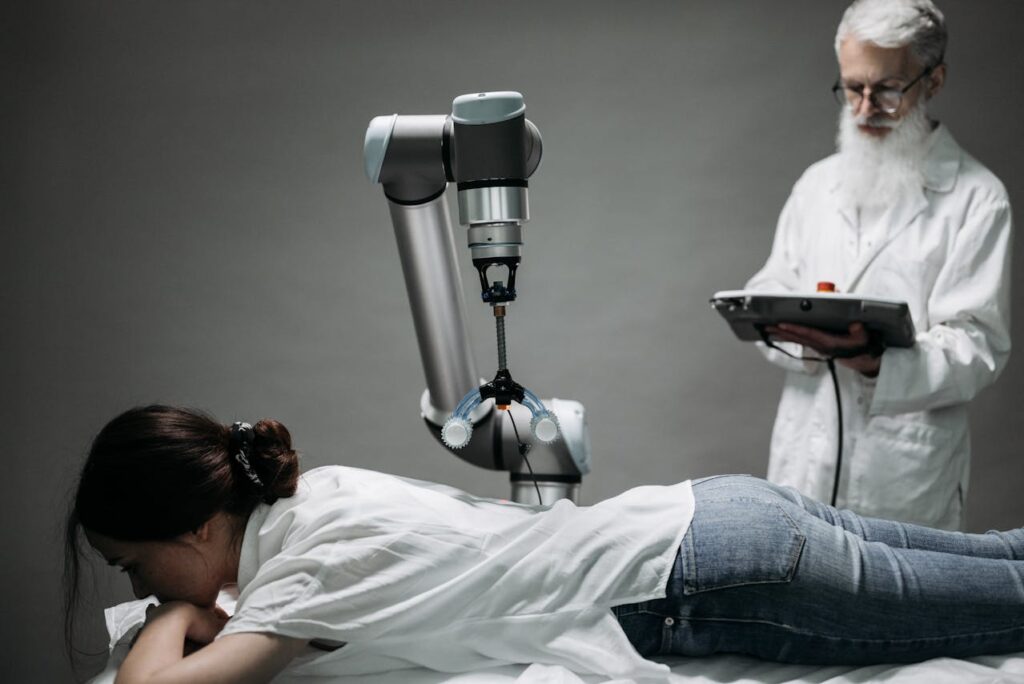
Healthcare Diagnosis in Seconds: AI Tools Doctors Rely on in 2025
Introduction: The New Standard in Speed and Accuracy in the Industry
Twenty-five years from now, the world of healthcare is experiencing a transition that has never been witnessed before. Artificial intelligence lies at the core of this transformation. It is not in the form of sentient robots; rather, it is in the shape of clever instruments that are operating in the background, providing medical personnel with accurate and lightning-fast diagnoses. Not only do these AI technologies empower physicians, but they also do not replace them. Artificial intelligence is bringing about a fundamental shift in the way that medical choices are made because of its capacity to handle massive volumes of data in a matter of seconds. This includes lab findings, imaging scans, patient histories, and even genomic sequencing. Previously, the diagnosis of diseases may take many days or even weeks, but today it can be done in a matter of minutes or even seconds. The outcome is a more expedient treatment, fewer mistakes, and the preservation of lives. Artificial intelligence has become an unseen but essential component of the healthcare team, and it is now present everywhere from hospitals in metropolitan centers to clinics in isolated locations.
1. AI that sees more than the human eye is the first step toward real-time radiology.
Medical imaging has been one of the most revolutionary applications of artificial intelligence. With the use of artificial intelligence, radiology technologies are able to interpret X-rays, MRIs, and CT scans more quickly than human doctors. These artificial intelligence systems are trained on millions of annotated pictures, and they are able to recognize tiny patterns that even expert radiologists could miss. The artificial intelligence identifies anomalies in a matter of seconds, ranging from early-stage malignancies to minute fractures, and evaluates the probability of each abnormality. This assists medical professionals in prioritizing cases that include high-risk results.
2. Artificial Intelligence in Pathology: Real-Time Analysis of Tissue and Blood Samples
Through the use of microscopes, staining, and the evaluation of specialists, pathology has traditionally been a laborious and time-consuming procedure. This process is now significantly accelerated by AI. A process that involves the scanning and interpretation of digitized pathology slides is carried out by algorithms that have been taught to identify malignant cells, infectious organisms, and other anomalies. Previously, it would take a laboratory several days to report anything, but today it can be identified and examined in a matter of minutes, which cuts down on patient wait times and speeds up treatment.
3. Chatbots and Symptom Checkers: First-Line Triage Powered by Artificial Intelligence
Even before a patient arrives at a hospital, artificial intelligence is already at work. Intelligent chatbots and symptom checkers that are linked into mobile applications or clinic websites lead users through a diagnosis flowchart depending on the symptoms that they have reported. The use of these tools may help limit down the alternatives and provide recommendations about whether a visit to the emergency room, a general practitioner, or a specialist is the most suitable course of action.
4. AI keeps a watchful eye on patients around the clock via wearables and continuous monitoring
Sensors enable modern smartwatches and health wearables to monitor a variety of vital signs, including heart rate, oxygen saturation, electrocardiogram patterns, and the quality of sleep, among other things. This stream of data is continually analyzed by AI algorithms, which then notify users and healthcare professionals of early warning signals for illnesses such as atrial fibrillation, respiratory distress, or even sudden cardiac arrest. In certain cases, these early warning indications notify the patient before the patient ever has any symptoms.
5. Imaging Made Easier and Smarter with Artificial Intelligence-Enhanced Ultrasound
Due to the combination of portable ultrasound equipment and artificial intelligence, diagnostic imaging has become accessible even in locations that are under-resourced or remote. With the help of the artificial intelligence, users are guided through the process of probe insertion, the picture is interpreted in real time, and diagnostic recommendations are provided. This makes ultrasonography accessible not only to radiologists but also to general practitioners, nurses, and field clinicians.
6. The Detection of Chronic Diseases at an Early Stage
In order to identify early indicators of chronic illnesses such as diabetes, hypertension, or chronic kidney disease, artificial intelligence algorithms are now being trained on large-scale health datasets. Artificial intelligence has the ability to forecast the beginning of illness years in advance by evaluating patient history, lab patterns, and even genetic susceptibility. This provides patients with the opportunity to make adjustments to their lifestyle or begin early therapies.
7. Evaluation of Mental Health Care Utilizing Voice and Behavior Analysis Systems
It is notoriously difficult to detect mental health conditions at an early stage, particularly in primary care organizations. There are now AI programs that may identify indicators of depression, anxiety, post-traumatic stress disorder (PTSD), or bipolar illness by using voice tone, facial expressions, word choice, and even patterns of phone use. These technologies function as early-warning systems, which stimulate further human review in situations when it is required.
8. The Use of Artificial Intelligence in Emergency Rooms: Efficient Triage and Improved Outcomes
The settings of emergency rooms are notoriously hectic and fraught with danger. Artificial intelligence provides assistance to triage nurses and emergency room physicians by digesting incoming patient data in a short amount of time, giving severity rankings, and generating high-probability diagnoses. Both the ability to make decisions under duress and the amount of time that essential patients have to wait for treatment are improved as a result of this.
9. Artificial intelligence speeds up personalized medicine via genomic diagnostics
As a result of sequencing a genome, billions of data points may be obtained. To detect genetic alterations that are associated to illnesses such as cancer, uncommon disorders, and hereditary problems, artificial intelligence assists in the interpretation of this large amount of information. Doctors are able to generate highly individualized treatment plans by connecting genetic markers with known databases. These plans may include anything from the selection of medications to the development of disease preventive programs.
10. Drug Interaction Warnings Generated by Artificial Intelligence
There is an increased likelihood of adverse drug interactions when patients take many drugs, which is referred to as polypharmacy. With the incorporation of artificial intelligence techniques into electronic health record (EHR) systems, any conflicts are immediately identified and the prescribing physician is notified in real time. This guarantees the safety of patients, particularly in populations who are old or suffer from chronic illnesses.
11. Diagnosis of Dermatology Through Application of Image Recognition
Using a smartphone and an artificial intelligence program, it is now possible to detect skin disorders. Patients have the ability to snap photographs of rashes, moles, or lesions, and artificial intelligence algorithms will offer quick feedback on whether the disease is likely to be benign, infectious, or clinically significant. The use of these technologies allows dermatologists to prioritize urgent situations and limit the number of visits that are not essential.
12. Using Artificial Intelligence to Treat Infectious Diseases Observation and Action in Response
Ongoing monitoring of illness patterns across hospitals, clinics, and public data sources is carried out by artificial intelligence systems. These algorithms are able to detect epidemics sooner, identify the source, and simulate the propagation, which enables quicker responses to threats such as variations of COVID-19, dengue outbreaks, or germs that are resistant to antibiotics.
13. Voice-to-Text Artificial Intelligence Tools for Medical Documentation
When it comes to documentation, doctors devote a significant portion of their time. Voice-to-text systems that are driven by artificial intelligence can now transcribe clinical talks instantaneously and with medical precision. The result is a reduction in burnout and an improvement in workflow efficiency, as doctors are able to devote more time to providing treatment to patients rather than carrying out administrative activities.
14. Artificial Intelligence in Cardiology: Instantaneous Detection of Early Signs of Heart Disease
Diseases of the cardiovascular system are the biggest cause of mortality around the globe. In order to identify signals of cardiac illness, artificial intelligence technologies now evaluate electrocardiograms, echocardiograms, and patient vitals. This may sometimes occur years before symptoms manifest. The use of these instruments enables early intervention and adjustments in lifestyle by identifying irregularities immediately and providing suggestions for further measures.
15. Using Artificial Intelligence as a Teaching Assistant to Train the Next Generation
Diagnostics are being taught in medical schools with the use of artificial intelligence (AI) by mimicking real-world patient situations. Students engage in conversation with simulated patients, get feedback on their diagnosis, and gain knowledge from their errors, all within a learning environment that is driven by artificial intelligence and can adjust to the students’ individual strengths and limitations.
16. Using Artificial Intelligence in Telemedicine to Achieve Instant Results
It is no longer sufficient to just use video calls for telemedicine. In order to improve the quality of virtual consultations, artificial intelligence analyzes patient speech, facial expressions, and even uploaded medical papers while the conversation is continuing. The fact that doctors get diagnostic recommendations and risk assessments in real time makes it possible for them to provide treatment remotely that is equally as effective as in-person appointments.
17. Obstacles to Trust and Responsibility in Artificial Intelligence’s Diagnosis
Artificial intelligence in the medical field must be treated with caution, despite its speed and precision. Patients need to be told that artificial intelligence was employed in the diagnosis process, and medical professionals need to have an understanding of how an AI system arrives at its results. The continuous integration of artificial intelligence technologies into medical care makes it more important than ever to ensure openness, ethical use, and data protection.
18. A Look Ahead: The Prospects for Artificial Intelligence and Instant Diagnostics
It is reasonable to anticipate that artificial intelligence will become even more integrated with wearable technology, gene editing, robots, and cloud-based health systems during the next five to ten years. The reality of being able to diagnose an illness only a few seconds after the onset of symptoms, or perhaps earlier, is now within realistic grasp. Not only is artificial intelligence revolutionizing healthcare, but it is also redefining what is achievable in terms of human health and lifespan.
A Few Closing Thoughts: Giving Doctors More Power While Saving Lives
AI in the medical field is not about replacing human physicians with robots; rather, it is about providing medical professionals with superpowers. With the advent of real-time diagnosis, immediate data processing, and predictive modeling, medical professionals in the year 2025 are able to make judgments much more quickly and with more accuracy than ever before. What is the end result? There will be less waiting, more accuracy, better outcomes, and every day, lives will be saved. In spite of the fact that the tools are digital, the effect is very human.