How Independent Landlords Use AI to Streamline Tenant Background Checks and Income Verification
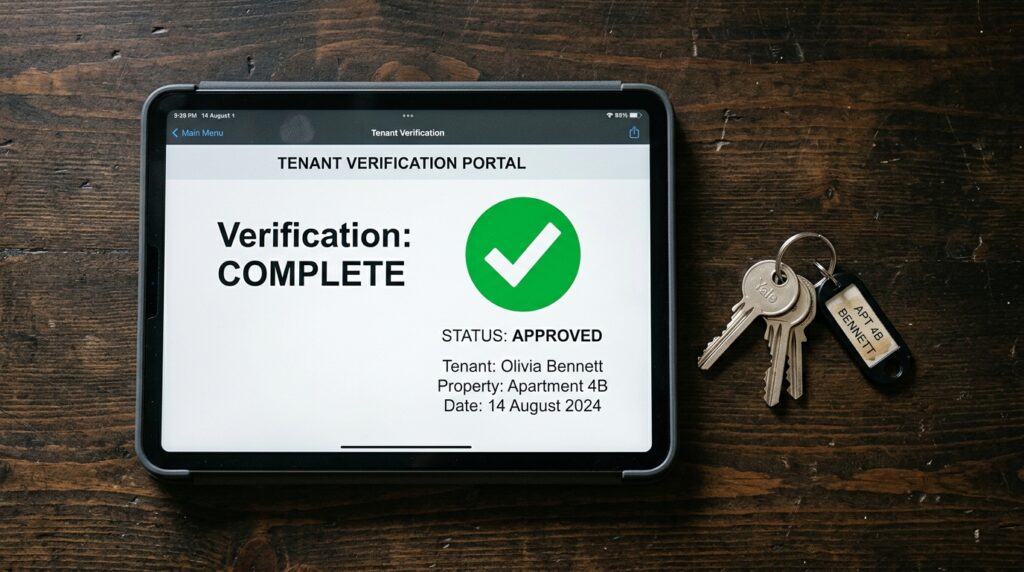
How Independent Landlords Use AI to Streamline Tenant Background Checks and Income Verification
When it comes to screening new renters, independent landlords often encounter major obstacles, particularly when it comes to validating background information and evaluating the financial stability of the tenant. Traditional methods of tenant screening entail manual document inspection, reference checks, and verification procedures that are time-consuming and may cause delays in lease decisions. Not only do these inefficiencies slow down occupancy rates, but they also raise the possibility of mistakes or incomplete assessments due to the fact that they are not efficient. As a result of the development of artificial intelligence, landlords now have access to technologies that can automate and improve the screening process. AI-driven systems are able to do data analysis on applicants in a short amount of time, verify the sources of income, and identify possible dangers with higher precision. When it comes to landlords who manage many properties without specialized administrative staff, this trend toward automation is very useful. Using artificial intelligence, autonomous property owners are able to make judgments more quickly and with more accuracy. The outcome is a leasing procedure that is more efficient and a reduction in the amount of exposure to renters that pose a high risk.
Recognizing the Role of Artificial Intelligence in Tenant Screening Procedures
The use of artificial intelligence in tenant screening entails the evaluation of applicant information via the use of machine learning algorithms and data analysis methods. These systems receive and process information from a wide variety of sources, such as job records, credit histories, identity papers, and application forms. In contrast to human screening, artificial intelligence has the capacity to evaluate massive amounts of data and recognize patterns that can suggest dependability or danger. The system is able to read unstructured data, such as letters of employment or bank statements, thanks to the use of natural language processing. Because of this, it is possible to conduct a more thorough review of each application. The system is able to increase its accuracy over time by gaining knowledge from previous judgments and the results of those decisions. When it comes to landlords, this implies that the screening findings will be more consistent and impartial. The automation of these procedures enables a reduction in the amount of human involvement that is required and speeds up the decision-making process.
The Integration of Data for the Automation of Background Check Programs
Background checks are an essential part of the tenant screening process; nevertheless, they can include a number of different stages and sources of information. By connecting with databases that give information on criminal histories, rental history, and credit behavior, artificial intelligence algorithms make this procedure more efficient. Immediately after an applicant has submitted their information, the system will instantly retrieve and examine any pertinent data. It is no longer necessary for landlords to personally call references or check through records because of this circumstance. Additionally, AI is able to cross-reference information in order to identify irregularities or possible instances of fraud. It is possible, for instance, to flag for investigation any anomalies that exist between the reported employment and the financial activities. When it comes to background checks, this level of automation guarantees that they are both comprehensive and effective. Because of the reduction in the amount of manual labor, landlords are able to concentrate on analyzing performance rather than collecting data.
The Improvement of the Accuracy of Income Verification
When it comes to evaluating whether or not a renter is able to pay rent, income verification is a vital component; nevertheless, conventional techniques often depend on papers that are readily manipulable. The analysis of various data points, such as bank transactions, payroll records, and job history, is one way that AI-powered systems increase accuracy. These algorithms are able to recognize patterns that either validate constant revenue streams or reveal abnormalities. In order for the system to extract data from documents that have been uploaded, optical character recognition is used, and machine learning models are utilized to check the information against established standards. This decreases the likelihood of accepting papers that have been forged. AI may also evaluate the consistency of revenue over time, which provides a more nuanced perspective on the dependability of financial resources. In the case of independent landlords, this guarantees that renters are assessed on the basis of data that has been verified and thoroughly examined. It is possible to lower the chance of payment failures by verifying income accurately.
Reducing the amount of time spent screening and for decision-making
The huge decrease in processing time is one of the most immediate advantages that artificial intelligence brings to the tenant screening process. When waiting for answers from employers or references, traditional techniques might take several days to complete. This is particularly true when working with references. Through the automation of data gathering and processing, artificial intelligence systems are able to do the same tasks in a matter of minutes. Because of this سٱعة, landlords are able to make lease choices more quickly and successfully obtain renters more quickly. In highly competitive rental markets, where delays may result in missed chances, it is very crucial to have processing times that are as fast as possible. Artificial intelligence enables landlords to process more applications in an effective manner by optimizing operations. This increased speed does not come at the price of accuracy, since automated systems continue to maintain high standards of assessment. The combination of speed and dependability results in an increase in the overall efficiency of operations.
The enhancement of risk assessment and the selection of tenants
Artificial intelligence-driven screening technologies provide enhanced risk assessment capabilities that go beyond the capabilities of simple inspections. These kinds of technologies are able to forecast the possibility of late payments or lease violations by evaluating past data and patterns of behavior. The generation of risk scores is based on a number of different factors, which provides landlords with a transparent and objective basis for making decisions. Consequently, this lessens the dependence on subjective judgment and contributes to the maintenance of fair and consistent ratings. Moreover, artificial intelligence is able to recognize tiny signs of danger that would not be obvious via human examination. It is possible, for instance, to draw attention to erratic patterns of revenue or inconsistent rental histories. With the help of this all-encompassing evaluation, landlords are able to choose renters who are more likely to fulfill their duties. A more effective tenant selection process results in fewer disagreements and a more consistent revenue from rentals.
Improving Data Security and Compliance with Regulations
When dealing with sensitive information about tenants, it is essential to comply to data protection rules in a stringent manner. Encryption, safe data storage, and access restrictions are some of the security aspects that figure in the design of AI screening systems. These precautions guarantee that sensitive information, including financial and personal details, is shielded from inappropriate access. Landlords are able to monitor the processing and use of data via the use of automated systems, which provide extensive audit trails. As a result of the system’s inherent compliance with applicable legislation, the likelihood of encountering legal problems is minimal. When it comes to maintaining application data, this gives independent landlords a sense of peace of mind. The administration of information in a secure manner also helps to develop confidence with potential renters. These artificial intelligence technologies offer safe and ethical screening processes by placing a priority on data security.
It is more cost-effective for independent landlords to…
When it comes to implementing new technologies, cost efficiency is a crucial factor for independent landlords to take into mind. The use of screening systems powered by artificial intelligence reduces the need for human labor and external verification services, which in turn reduces total expenditures. In addition, faster processing times reduce the amount of time that vacancies occur, which has a direct influence on rental revenue. Increasing the quality of the tenant selection process allows landlords to prevent expensive problems such as late payments, evictions, or damage to their property. Numerous artificial intelligence technologies include price models that are scalable, making them affordable to owners of modest properties. As a result of decreased operating expenses and increased rental stability, the return on investment becomes readily apparent. These cost reductions, when added up over time, lead to increased profitability. AI makes it possible for landlords to conduct screenings at a professional level without incurring considerable additional costs. This makes cutting-edge technology available to those who manage portfolios that are on the smaller side.
The Emerging Trends in Artificial Intelligence-Powered Property Management
The technology and artificial intelligence that are driving the future of property management are becoming more important. There is an expectation that emerging technology will significantly improve tenant screening procedures by providing more accurate prediction models and real-time data analysis. The integration of larger property management systems will result in the creation of procedures that are smooth from the application to the signing of the lease. There is also the possibility that AI may provide continuous tenant monitoring, which would provide insights into payment patterns and maintenance requirements. Voice-based interfaces and mobile apps have the potential to make these technologies even more user-friendly. As the use of artificial intelligence (AI) solutions increases, they will become more accessible and inexpensive. When it comes to the rental market, independent landlords that are willing to accept these developments will have an edge over their competitors. It is a huge step toward operations that are smarter and more efficient that the growth of AI-powered property management represents.