Reducing Claim Rejection Rates in Solo Medical Billing Practices Through AI Pre-Screening
Reducing Claim Rejection Rates in Solo Medical Billing Practices Through AI Pre-Screening
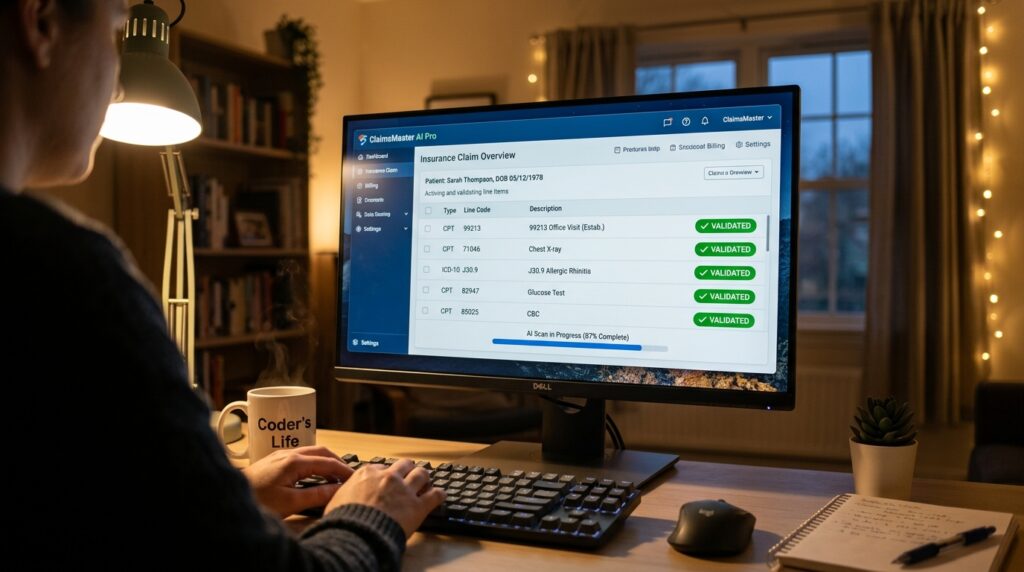
When it comes to properly handling claim submissions while preserving accuracy, solo medical billing businesses sometimes encounter major obstacles. The rejection of claims is a typical problem that is often brought on by coding mistakes, the absence of information, or the failure to comply with the standards of the payer. These denials not only cause delays in payments but also increase the amount of work that has to be done in administration since every claim that is refused needs to be scrutinized and resubmitted. Workflows for traditional billing are primarily dependent on manual inspections, which are not only time-consuming but also prone to errors caused by humans. Rejection is a danger that continues to increase as the complexity of healthcare legislation and payer requirements continues to increase. There is already a trend toward using artificial intelligence to pre-screen claims prior to their filing, which assists in identifying possible problems in advance. Artificial intelligence systems are able to identify problems and provide suggestions for repairs by studying claim data and applying validation standards. Taking this preventative strategy lowers the percentage of rejected applications and increases overall efficiency. Pre-screening using artificial intelligence provides a realistic option for solo practitioners, allowing them to expedite billing processes and retain financial stability.
Utilizing Artificial Intelligence for Pre-Screening in Medical Billing
In the field of medical billing, artificial intelligence pre-screening refers to the technique of using machine learning algorithms to examine claims prior to their submission to insurance carriers. These systems do an analysis on essential data pieces, including information on patients, codes for procedures and diagnoses, and requirements for payers. The artificial intelligence system is able to spot discrepancies or inaccuracies by comparing this data to predetermined rules and the results of previous claims. Artificial intelligence provides a complete check across all categories, in contrast to human examination, which may miss relatively minor information. It is via the process of learning from prior claims and rejection patterns that the system is able to constantly improve its accuracy. On account of this, screening will grow more efficient throughout the course of time. This results in fewer mistakes and more dependable claim submissions for practices that are solely responsible for billing. In the context of the billing process, artificial intelligence pre-screening functions as an automated quality control layer. In the process of submitting claims, it helps to ensure that they satisfy all of the relevant standards.
The Most Common Reasons for Rejecting a Claim
In order to improve billing efficiency and reduce mistakes, it is vital to grasp the reasons behind the rejection of claims. Incorrect coding, missing patient data, and mismatched diagnostic and treatment codes are some of the most common reasons of this common problem. There are various factors that lead to rejections, such as eligibility difficulties, such as inactive insurance coverage. There are instances when claims are rejected because they do not comply with certain payer rules or paperwork needs to be submitted. Manual methods often have difficulty catching all of these flaws in a consistent manner. The purpose of artificial intelligence systems is to identify these typical mistake patterns and flag them before they are submitted. It is possible for practices to considerably minimize the number of rejections if they address these issues at an early stage. Determining the underlying reasons is the first stage in the process of increasing billing accuracy. Artificial intelligence offers a methodical approach to the management of these difficulties.
Error Detection and Validation Through Automated Solutions
Artificial intelligence pre-screening solutions help automate the process of mistake detection by verifying claim data against a number of different criteria. The software examines the data to see if there are any missing fields, improper formats, or discrepancies between the various data points. In addition, it is able to check that the codes are in accordance with the most recent medical coding standards and payer rules. For the purpose of ensuring that claims are full and correct prior to submission, this automated validation procedure exists. Artificial intelligence delivers validation that is both consistent and comprehensive, in contrast to human inspections, the quality of which might vary. Because it is able to handle high numbers of claims in a short amount of time, the system is perfect for active practices. Billing experts are able to devote their attention to correcting problems that have been detected rather than looking for them when mistake detection is automated. Effectiveness and precision are both enhanced as a result of this. In today’s medical billing systems, automated validation is an essential component that must be included.
Enhancing the Level of Coding Accuracy and Compliance
Coding that is accurate is absolutely necessary for the successful filing of a claim, and mistakes in coding are a key contributor to the rejection of claims. Through the analysis of the links between procedures and diagnoses, AI systems contribute to the improvement of coding accuracy. On the basis of patient data and clinical documentation, they are able to provide suggestions on acceptable codes. This decreases the possibility of code combinations that are either mismatched or incorrect. In addition, AI assures compliance with the most recent coding standards and restrictions that are unique to carriers. Whenever there is a change in legislation, the system is able to adjust without the need for human updates. When it comes to solo practices, maintaining compliance might be difficult owing to the limited resources available. AI offers continuous assistance in regards to the maintenance of coding standards that are correct and compliant. An increase in the accuracy of the coding results in a greater acceptance rate and a quicker reimbursement process. When it comes to avoiding fines and delays, compliance is very necessary.
Eliminating the burden of administrative work
It takes more time and effort to handle denied claims, which increases the administrative load that solo billing firms have to bear. The use of artificial intelligence for pre-screening helps to decrease this effort by eliminating mistakes before they occur. The amount of time spent on claim revisions and resubmissions is reduced when there are fewer rejections. As a result, billing experts are able to devote their attention to other crucial responsibilities, such as communicating with patients and managing finances. The requirement for human inspections that are performed repeatedly is also reduced by automation. Utilizing AI to streamline operations results in an increase in overall productivity. Therefore, this efficiency is particularly useful for solo practitioners, who often have fewer resources at their disposal. The reduction of administrative burden contributes to the maintenance of a balanced and controllable operation. Artificial intelligence allows practices to function more efficiently while using less resources.
Facilitating Improvements in Cash Flow and Revenue Cycle Management
Rejecting a claim may put a strain on cash flow since it delays payments and lengthens the amount of time it takes to process. Artificial intelligence pre-screening helps to guarantee that claims are approved on the very first submission, which ultimately results in speedier reimbursements. Consequently, this results in an improvement to the whole revenue cycle and generates more consistent income. Practices are able to retain higher financial stability if they use measures to reduce delays. Artificial intelligence technologies can provide insights about billing performance, which may assist in identifying areas that might want improvement. These insights provide support for tactics that are more successful in managing the revenue cycle. To ensure the long-term viability of solo practices, it is essential to achieve and preserve a regular cash flow. The improvement of billing procedures via the use of AI guarantees that they contribute favorably to the overall financial health. There is a clear correlation between faster payments and fewer rejections and increased profitability.
Integration with Practice Management Systems and Information Billing Systems
When combined with pre-existing billing and practice management systems, artificial intelligence pre-screening solutions operate at their highest level of efficiency. This interface makes it possible for patient records, billing software, and claim submission systems to exchange data in a smooth manner among themselves. Validation in real time guarantees that mistakes are discovered when the data is being input, as opposed to being discovered after the claim has been finished. This enhances efficiency and decreases the amount of rework that is required. Integration also makes it possible to consolidate reporting and analytics, which provides a full picture of the performance of billing. This unified approach makes operations easier to understand and decreases the amount of complexity involved for solo practices. Artificial intelligence improves the consistency and precision of workflow by bringing together various systems. When it comes to realizing the advantages of automation, integration is very necessary.
Perspectives on the Future of AI-Driven Medical Billing
Artificial intelligence and automation are making significant strides, which will have a significant impact on the future of medical billing. There is an expectation that new technologies will improve pre-screening capabilities by providing more sophisticated predictive analytics. Soon, artificial intelligence systems could be able to predict the outcomes of claims by analyzing past data and the actions of payers. The incorporation of electronic health records will result in the acquisition of more profound insights into the correctness of patient data and billing. It is possible that automation may spread to other parts of the revenue cycle, which will further reduce the amount of human labor required. Solo billing practices will be able to compete more successfully with bigger firms as these technologies become more available to the general public. As artificial intelligence becomes more widespread, it will continue to deliver benefits in terms of efficiency, accuracy, and financial performance. This development reflects a substantial change toward billing procedures that are more intelligent and efficient via the use of technology.